A 48 hour excursion to Kuala Lumpur

The Petronas Towers in Kuala Lumpur after dark

Malaysia is one of those countries I’ve always figured I’d stop by at some point. Not as a main destination, but as a part of a trip to somewhere else in Asia. I guess I also knew that this «somewhere else» would be Singapore, a country I saw myself visiting someday anyway. And when that trip to Singapore was finally booked, my next concern was figuring out how to fit an excursion to Kuala Lumpur into that trip. Luckily my travel partner was immediately excited about the suggestion, so all I needed to do was to make it happen.
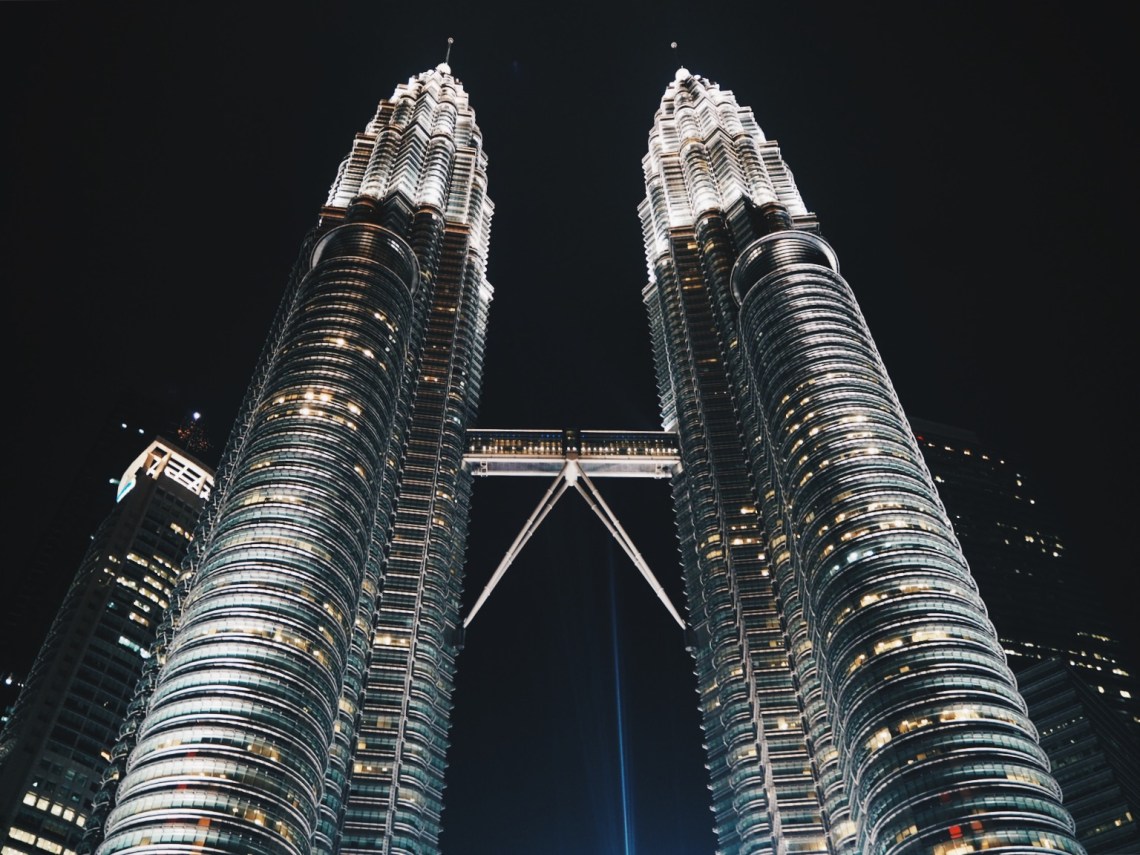
The Petronas Towers in Kuala Lumpur after dark

Getting from Singapore to Kuala Lumpur

Singapore and Kuala Lumpur is no more than 5-6 hours apart by bus, but I still found booking bus tickets in Asia a lot more difficult than in South America. After going back and forth for a while we decided on the bus company called Aeroline, which seemed to be getting the best reviews, although also slightly more expensive than the other companies. When trying to book a ticket for the following day, we realized that they were all sold out. That meant going through the companies once more, to find the second best option. We went with First Coach to get to KL, and booked our return tickets with Aeroline at the same time.

We were more than satisfied with both companies. They both departed on time, waited for all passengers to get through immigration (I’ve readabout people getting left at the border because immigration took too long) and took us to the point of arrival as promised. They also both made a short stop along the way, which is nice when you prefer actual toilets over bus toilets. Aeroline, is a bit more «luxurious», as the ride includes a meal and they have entertainment on board. Although Aeroline is known to be the most reliable choice, we had no complaints about First Coach, apart from it being very difficult to find out where to pick up our tickets, whichwe had booked online, at Novena Square. Apparently you get them at a travel agency on the top floor of the shopping centre.

Petronas Towers

I’m not gonna lie, the main reason why I wanted to visit Kuala Lumpur was to check out the Petronas Towers, so we did this almost immediately upon arrival. I had seen some cool pictures of the towers in social media, and just really wanted some of my own. As with all attractions you visit solely because of social media, the place was packed with people. Therefore getting those cool photos proved to be a challenge, but we certainly gave it our best shot.

We decided that we also wanted to take a tour of the towers, so the following morning we went to get our tickets for later that day. Although they were all sold out online, we had no problem getting tickets when showing up in person. I found the tour to be a bit overrated, but looking back at it I am happy I went. For some reason, I imagine that going up in the Menara KL Tower is a cooler experience, but I have no facts to back up that hypothesis.

Me in front of the petronas towers

Inside the Petronas Towers with Kuala Lumpur in the background

Batu Caves

When visiting KL for a day, you want to do some exploring. I certainly did, anyway, as I didn’t see myself returning anytime soon, and wanted to make the most out of the short stay. A quick google search on what to do in Kuala Lumpur, lead us to the Batu Caves; a Hindu shrine located a bit outside of the city. To get there we took the metro to KL Sentral, and from there we were supposed to catch a train to the caves. Due to maintenance work on the tracks, we had to catch a free bus to get to a different train station instead. A bit confusing, but eventually we made it.

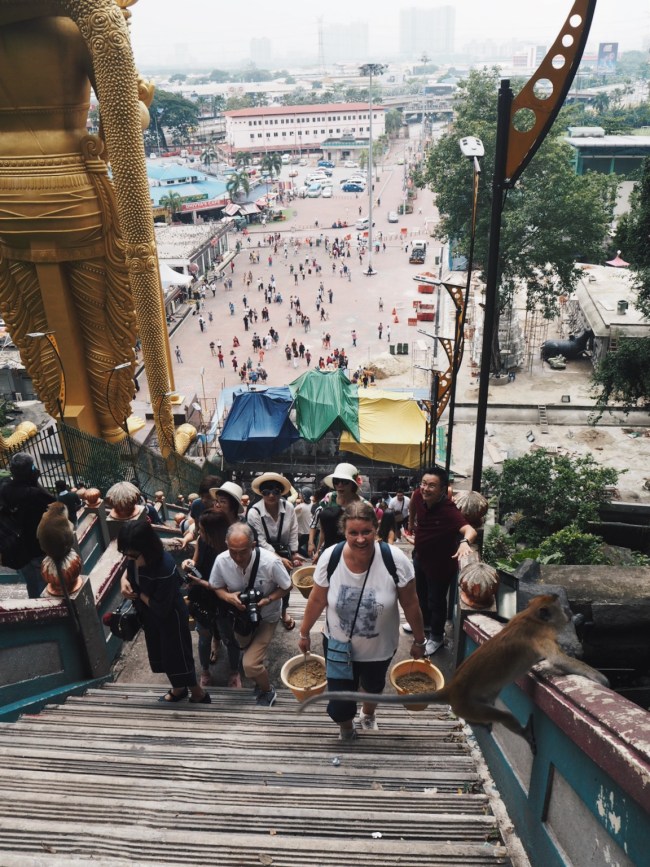
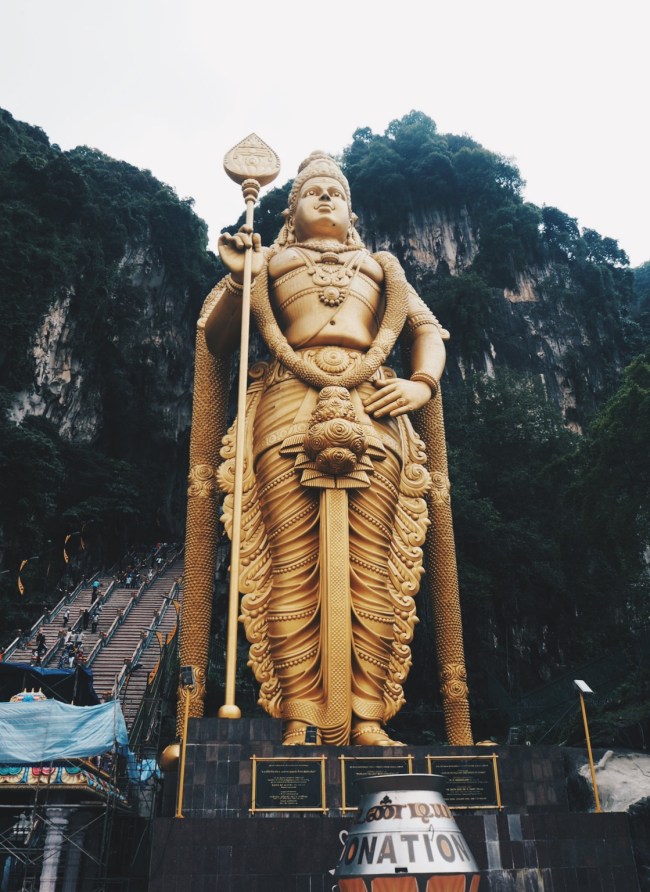
I quite enjoyed visiting this place, which features several different caves, and is also the home of tons of little monkeys. They look cute, but are also known to be sneaky little thieves, so visitors need to watch their belongings carefully. The highlight of the caves, to many, is getting a view of the giant Murugan statue and climbing the stairs up to the Temple cave. At the bottom of the stairs there were buckets of sand lined up, to be used for construction at the top. Everyone climbing the stairs were encouraged to help out by carrying what they could. We took on the challenge, and with one bucket in each hand we climbed the 272 steps to get to the top.
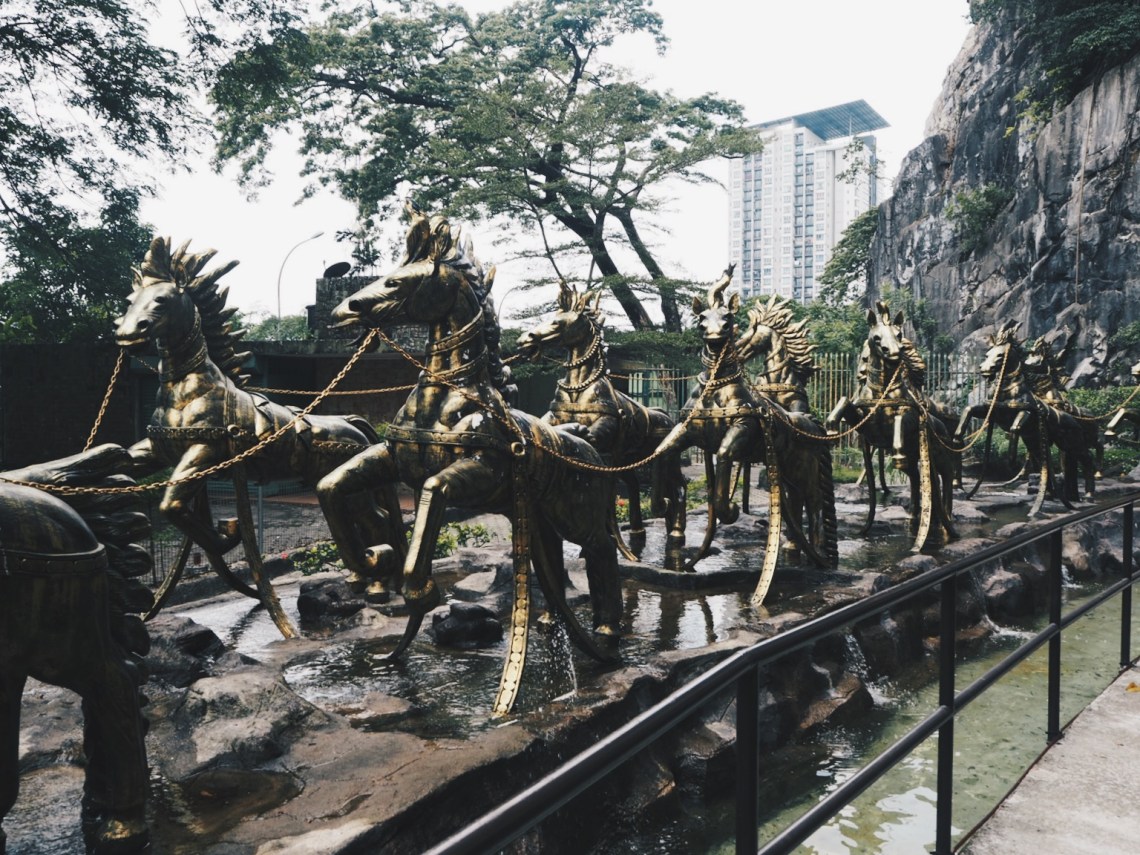
Horse statues by the Batu Caves

The Murugan Statue by the stairs leading to the Temple Cave, Batu Caves

Taking on the stairs to the Temple Cave, Batu Caves carrying sand buckets

Carrying buckets of sand up to the Temple Cave, Batu Caves

Cute little monkey near the Batu Caves

Staying and eating

As we visited KL to see the Petronas Towers, we decided to stay as closely as possible. We found Acapella KLCC Suites at a booking site and were instantly amazed. For less than what we had paid for the quite mediocre hotel room in China Town, we got a two bedroom apartment with impeccable service. The manager of the complex even drove us to our bus at eight in the morning on the day of our departure, completely free of charge. I really felt like the staff made an effort to make our stay as good as possible, and the entire stay stood out as a very positive experience.

As for food, it certainly did not disappoint. Asian food is just so good. On our first night we ended up at a random restaurant, with menus only in the local language and staff that weren’t exactly fluent in English. I tried to explain that I was vegetarian, but had no idea if the waiter understood what I meant. As I was half-expecting to be served some meat or chicken, it was such a pleasant surprise to get served the most amazing vegetarian meal. I ended up getting way too much food (and ate it all), and it cost next to nothing.

While I found that Singapore is pretty expensive, I must say Malaysia is incredibly cheap.
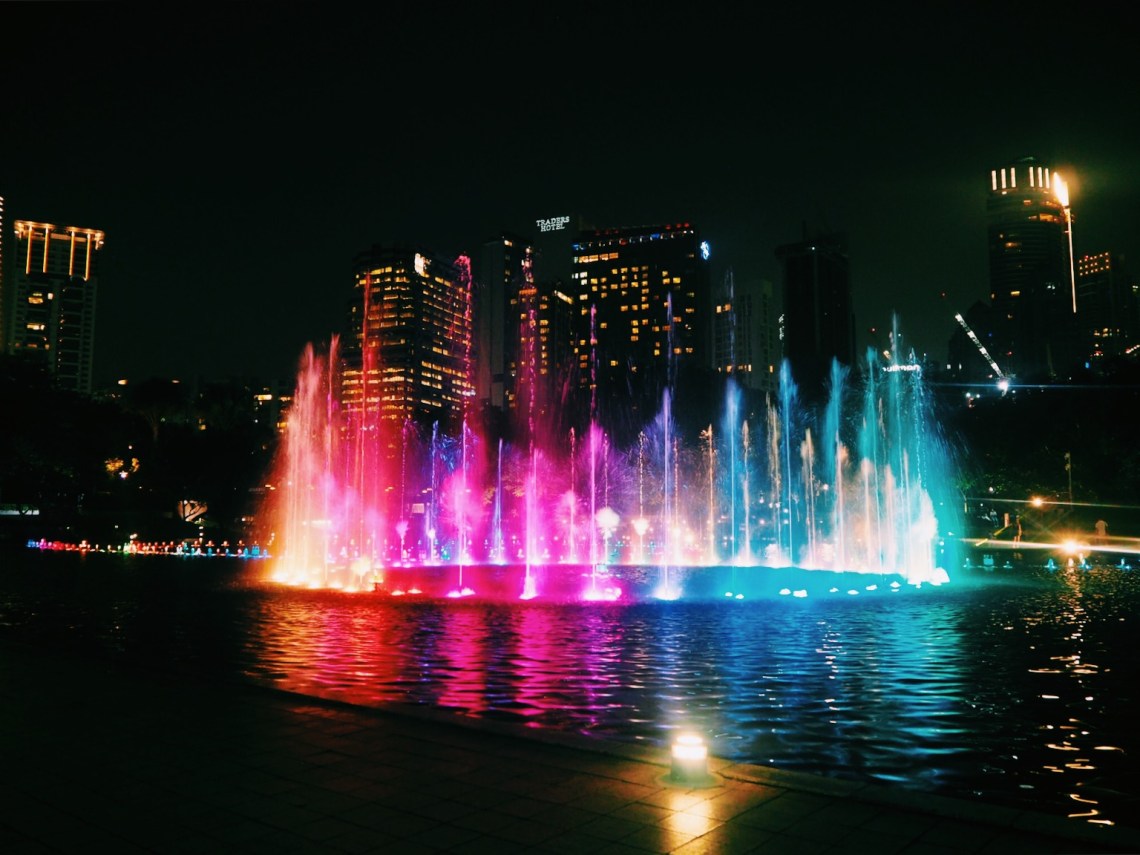
Colourful fountain show outside the Petronas Towers in Kuala Lumpur

We spent about 48 hours on the Kuala Lumpur excursion altogether, and I was so happy we went. I love visiting new places, and is all for making the most of the time I get to spend abroad. When deciding on making the trip, it was because I was convinced that a full week in Singapore would have been too long. Looking back, I am actually not sure if that would have been the case. There is a lot to do in Singapore, but Kuala Lumpur is a cool place, and I wouldn’t have done this trip in any other way.

♥ Erica

A spontaneous trip to Singapore

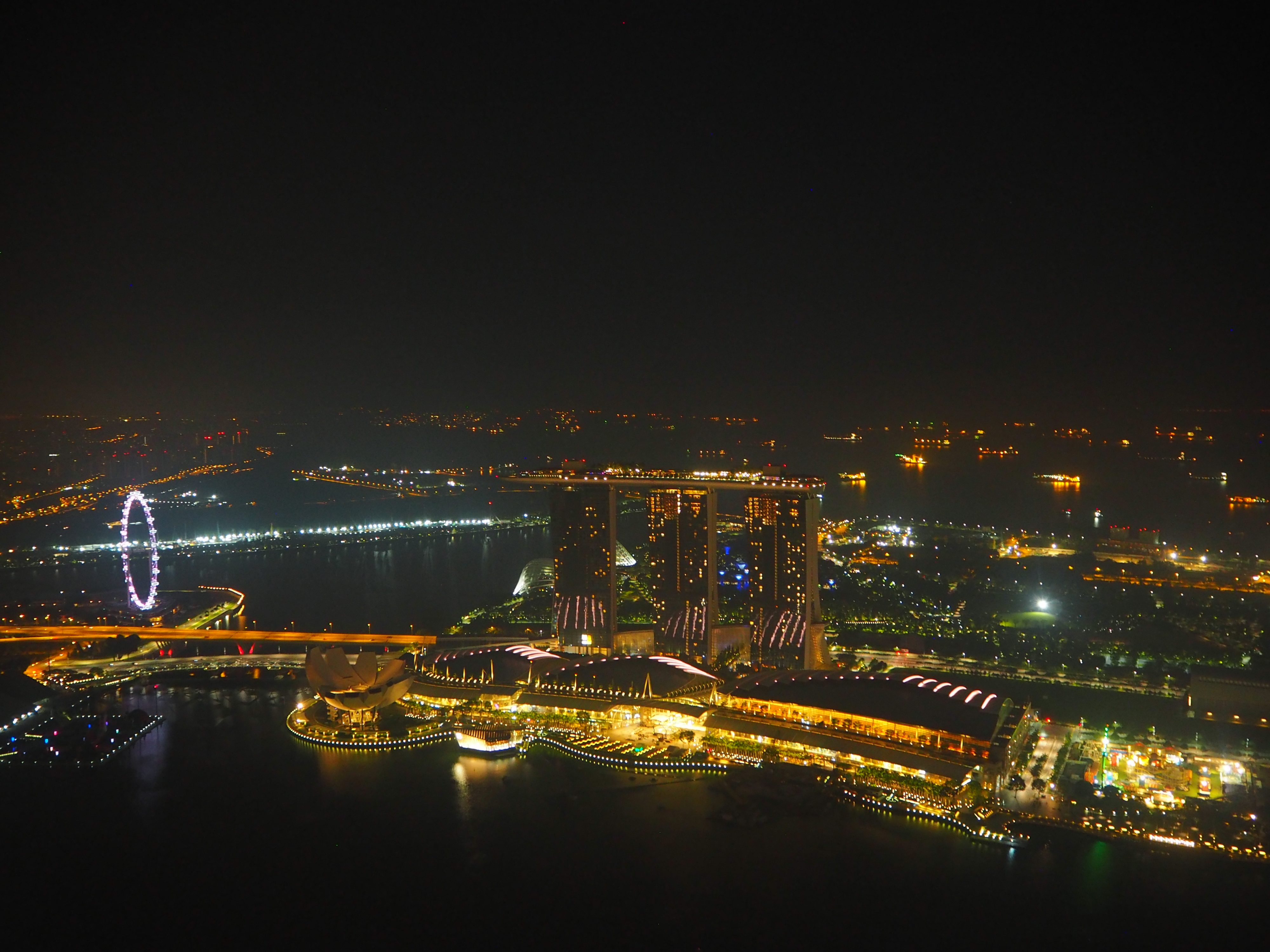
Singapore seen from above

The more I travel, the more I realize that traveling isn’t very complicated. I used to think that I needed a lot of time for it to be worth it to travel to places far away, and that for shorter trips I’d be better off just staying in Europe. I used to think that lots of time to plan a trip was essential. This is no longer the case.

Since about a month ago I have a new job, and while it’s nice to once again have an income, it also means I can’t just jump on a plane whenever I feel like it. But Easter was coming up, and when my other travel plans fell through, I knew I had to come up with something quickly. I simply had to take advantage of this full week of vacation. And so, all of a sudden a ticket to Singapore was booked. Departure time? Two days later.

I quickly realized that I didn’t know much at all about Singapore. Oh, it’s about thirty degrees every day? How lovely. Wow, there is actually quite a few things to do there. I had no idea. But off to Singapore we went, with suitcases fully packed with summer outfits, and having only booked a hotel for the first two nights. And to be honest I really feel like this is my preferred way of traveling; just making the road up as I go.

Singapore seen from above


China Town

For our first two nights in Singapore we stayed in China Town. Our hotel wasn’t anything special, as the bathroom was tiny and the bed was literally a mattress lying on the floor, but being located fairly close to the MRT (the Singapore metro), it was still a good base. Our first evening was spent exploring the area and having dinner at a restaurant close to one of the street markets. The food in Singapore is simply amazing. We decided to end the night early, as we were pretty tired from a long day of traveling.

The river walk

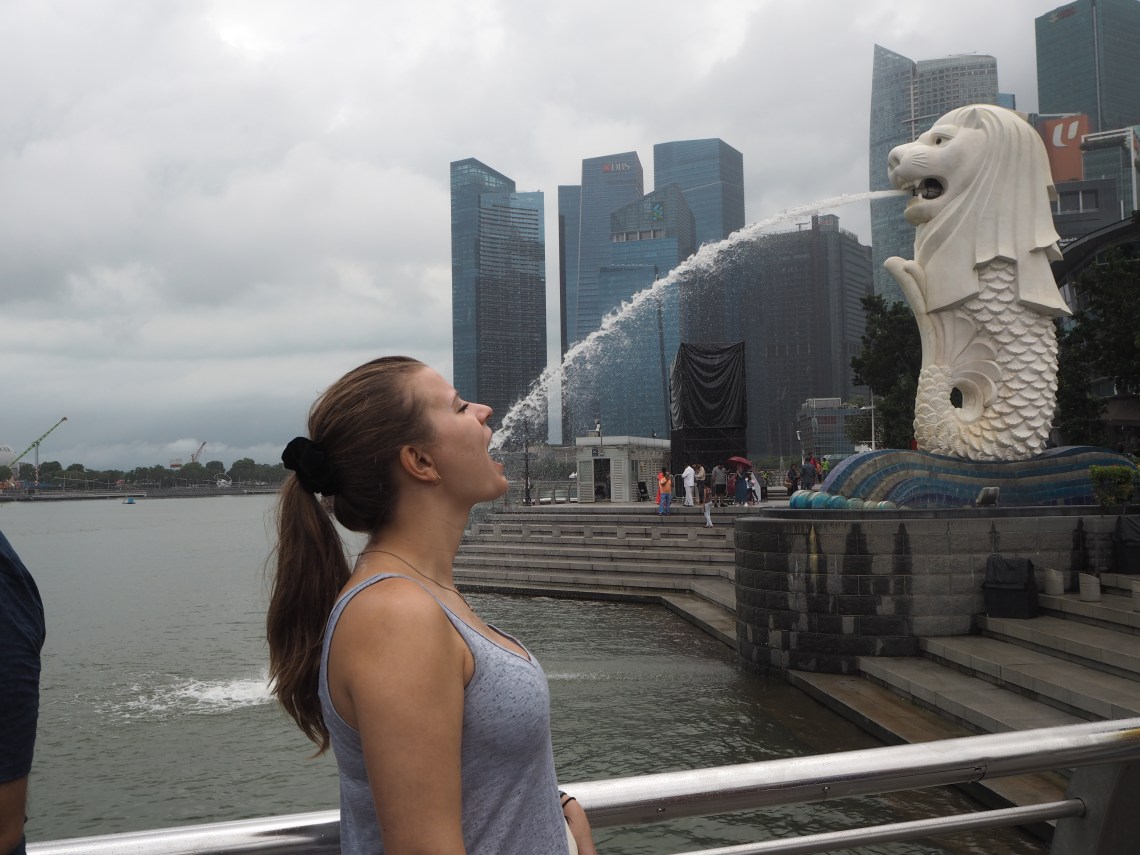
The morning after we woke up feeling revitalized, and set out to begin properly exploring the city. I had read about a river walk that was easily manageable on your own, and being a big fan of exploring new places by foot, I decided this was how our first day would be spent. We started by walking through China Town to reach the river in the Clarke Quay area. I immediately liked this area, as it had cute little restaurants, tons of bridges and little statues everywhere. All around you could see the skyscrapers that are very typical for Singapore. After having a healthy, delicious breakfast at a salad place, we ended up by the Merlion Statue that is a national icon for Singapore. From here we also had our first view of the Marina Bay area. This is probably one of the most popular areas in Singapore and also where our walk would terminate. When we were done taking photos of (and with) the Merlion we crossed the Anderson Bridge to get to the Esplanade. Here we bought some delicious coconut ice cream, that we had in an outdoor theatre that was slightly sheltered, as it had now started raining. Our walk finished as we crossed the Helix Bridge and made it to Marina Bay. Although the weather wasn’t completely on our side, it was still a lovely walk.

Drinking water out of the Merlion in Singapore

Gardens by the Bay

When first arriving at Gardens by the Bay, I had no idea of how much time I would be spending there throughout the next few days. There are a lot of things to do there, for sure, but we could probably have saved some time had we only done our research. Oh well, at least I can now say that I’ve seen those Supertrees in every lighting and weather condition possible.

We made our way to Gardens by the Bay after visiting the Art and Science Museum located just across the Helix Bridge. The museum is fairly entertaining, but also expensive, so if you’re on a budget I would recommend only visiting the Future World exhibition, as this is by far the best one. Upon entering Gardens by the Bay we quickly got the sight of the Supertree Grove, which made me really happy. The Supertrees are probably what made me eager to visit Singapore in the first place. In Gardens by the Bay you can also find the Flower Dome and the Cloud Forest, two greenhouse-like glass domes designed to be energy efficient showcases that minimizes the environmental footprint. The Flower Dome features plants found in seven different regions of the world, and is the world’s largest columnless glass house. The Cloud Forest replicates the climate found in tropical mountain regions, and features a 42 meter tall “Cloud mountain” and the world’s tallest indoor waterfall. The Cloud Forest was definitely my favourite out of the two. As for food, we had my favourite meal throughout our entire stay in Singapore in Gardens by the Bay. The street food at Satay by the Bay is simply divine, even for me as a vegetarian. Truth be told I am still dreaming of the satay mushrooms I had that evening, and had it not been quite a long walk to reach the place, we probably would’ve gone back to indulge even more. It was that good!

Overview of the Flower Dome in Singapore Alice in Wonderland in the Flower Dome in Singapore Indoor waterfall in the Cloud Forest in Singapore Beautiful scenery in Cloud Forest in Singapore Mother walking in the Cloud Forest in Singapore

The Supertree Grove

While the Supertrees make for an impressive watch from the ground, most people will also want to walk the OCBC skyway; a panoramic walk where you get really up-close to the Supertrees at a height of 22 metres. We attempted to do the walk several times, and succeeded on our third attempt. If you plan on visiting, remember that the skyway closes when it rains, and that the ticket sales end at 8 pm. Standing in line for about an hour should also be expected, although we found the queue to be quick and efficient and probably only took half an hour. In the end I found going up there to be well worth the effort. Another reason to visit the Supertree Grove is the light and sound show held every night at 7.45 pm and 8.45 pm.


OCBC Skyway and the supertrees in Gardens by the Bay Standing on the OCBC Skyway

Sentosa Island

Sentosa is a beach resort-like part of Singapore, a bit away from the centre, but still very accessible with the cable cars (and it’s worth going there for the cable cars alone, really). We got on the cable cars at Harbourfront, and went all the way up to Mount Faber before getting off at Sentosa Island. On Sentosa we found another Merlion Statue and visited the aquarium, before sitting down to relax with a coffee and a donut. We then got on the second cable car to get a nice overview of the island and its beaches from above. Like the rest of Singapore, Sentosa is very nice and clean. We were really lucky with the day we spent on Sentosa as this was in fact the only sunny day we had in Singapore, and Sentosa is definitely best on a sunny day.

Sentosa Island Cable car in Sentosa Singapore The beach in Sentosa Singapore

Sky bars

Have you even visited Singapore if you haven’t been to a skybar? I think not. We had postponed our sky bar visit every night, and on our last night we realized that it was just something that we had to do. And if you’re going to visit a sky bar, you might as well visit the tallest one with the most impressive sky deck. One-Atmosphere it was. To enter One-Atmosphere you have to pay 35 SGD (about 210 NOK), but that includes a drink. Inside tip: the Singapore Sling does not have alcohol, and may or may not be a disappointing choice. I went with the Monster Caipiroska, and it was really good. The sky bar offers a 360 degree view of the city and they play music very much to my liking. Although we weren’t there to party the bar was well worth a visit, and I reckon it’s a pretty good place for a girls night out.

Apart from an actual sky bar, we also made it to the top of the Marina Bay Sands Hotel. As we weren’t staying nor eating at the Hotel we only bought tickets to the observation deck to take in the views. There was a lot of queueing involved, not only to buy tickets and to get into the elevator to go up there, but also to take the elevator back down. This made it slightly time consuming and it was also pretty expensive, but the views are stunning and it felt like one of those things you just have to do when in Singapore.

Admiring the view from a skybar in singapore

Arab Street

The Arab Street neighbourhood turned out to be such a pleasant surprise for me, and I can’t believe we almost missed it. After days of walking, stressing and exploring, we found ourselves having no plans for our last day in Singapore, but with an evening flight we had some time to kill before heading to the airport. We decided to hop on a metro to Bugis, just to stroll aimlessly around for a few hours. Arab Street is the Muslim quarter of Singapore, but also a bit of a hipster area. While the actual street called Arab Street didn’t instantly appeal to me, the rest of the neighbourhood sure did. Here you will find beautiful mosques, cute little Arab shops selling all kinds of stuff, amazing street art and some really cool restaurants and cafees. We sat down at a juice bar because we liked their chairs and their chilled vibe, and I had a really good ginger juice. The day spent in Arab Street was so nice, mostly because it didn’t feel stressed at all. Very much needed after doing all of the exploring.

Arab Street in Singapore Arab Street in Singapore Restaurant in Arab Street, Singapore

Our little, spontaneous Easter adventure turned out to be eventful to say the least. Not only did we prove to ourselves that planning a trip to Singapore while already being there is perfectly manageable, but we even managed to fit a 48 hour excursion to Kuala Lumpur into the itinerary. I mean, we were only a six hour bus ride away so why not? During our four days in Singapore I feel like I got to see the essentials while making myself acquainted in the city. Singapore was a pleasant surprise, and who knows? I might even make it back there some time in the future.

The Supertree Grove after dark

♥  Erica

Lima to Nazca, through Paracas and Huacachina

At one point I thought that I would end up spending quite a few days in Lima, but that plan quickly changed as I decided to go trekking instead. I therefore quickly rushed away from Huaraz the same night we finished the trek, and got on the night bus slightly tipsy after taking a few well-deserved celebratory drinks with some locals in a shady back alley. At least it made me sleep perfectly on the bus that night, and sometimes you’ve just got to embrace those oh so local experiences.

I arrived in Lima early in the morning and made my way to the Metropolitano to get to my hostel in Miraflores in the cheapest way possible. Before getting on the bus I had my first argument in Spanish, as the security guard at the station meant that my backpack was too big to go on the bus. When he realised that he was losing that argument he instead started yelling at me for not having bought a bus card. “Excuse me, but I have been in the city for ten minutes?” It also turned out that I could buy said card from a machine less than a meter from where I was standing. I guess some people just argue for the sake of it. Eventually it all worked out and I made it to Miraflores; an area I immediately liked. It was so developed and different from all the places I had been recently, and I found myself enjoying the change of scenery. I spent the first day in Lima just walking around the area, taking a stroll down by the beach and checking out some shops and restaurants. Those days are needed every now and then. For my second, and last, day in the city I went into the centre to take a look around and spent a few hours checking out a few seemingly important buildings without caring enough to find out what they actually were.

In the afternoon it was time to gather my stuff and move to Barranco, a different area of town, where I would meet the group I would be traveling with for the next three weeks. After more than two months of traveling and working everything out myself it was a strange feeling being about to give up all control and also traveling with a group I didn’t choose myself. I was definitely curious as I made my way down to the welcome meeting at 6 pm. A few hours later I was sat in a bar with 13 people who were about to become my friends, laughing and playing drinking games. I figured three weeks of organised traveling wouldn’t be that bad after all.

We woke up early the following day and got ready for the first out of many bus rides together. Our first destination was Paracas, a tiny town mostly known for its excursions to Ballestas Island. It turned out the town didn’t have much more than that, and as I, having been to the slightly more spectacular Galápagos Islands, opted out of that excursion, Paracas didn’t really stand out to me. Those who went on the boat trip seemed happy about the experience.

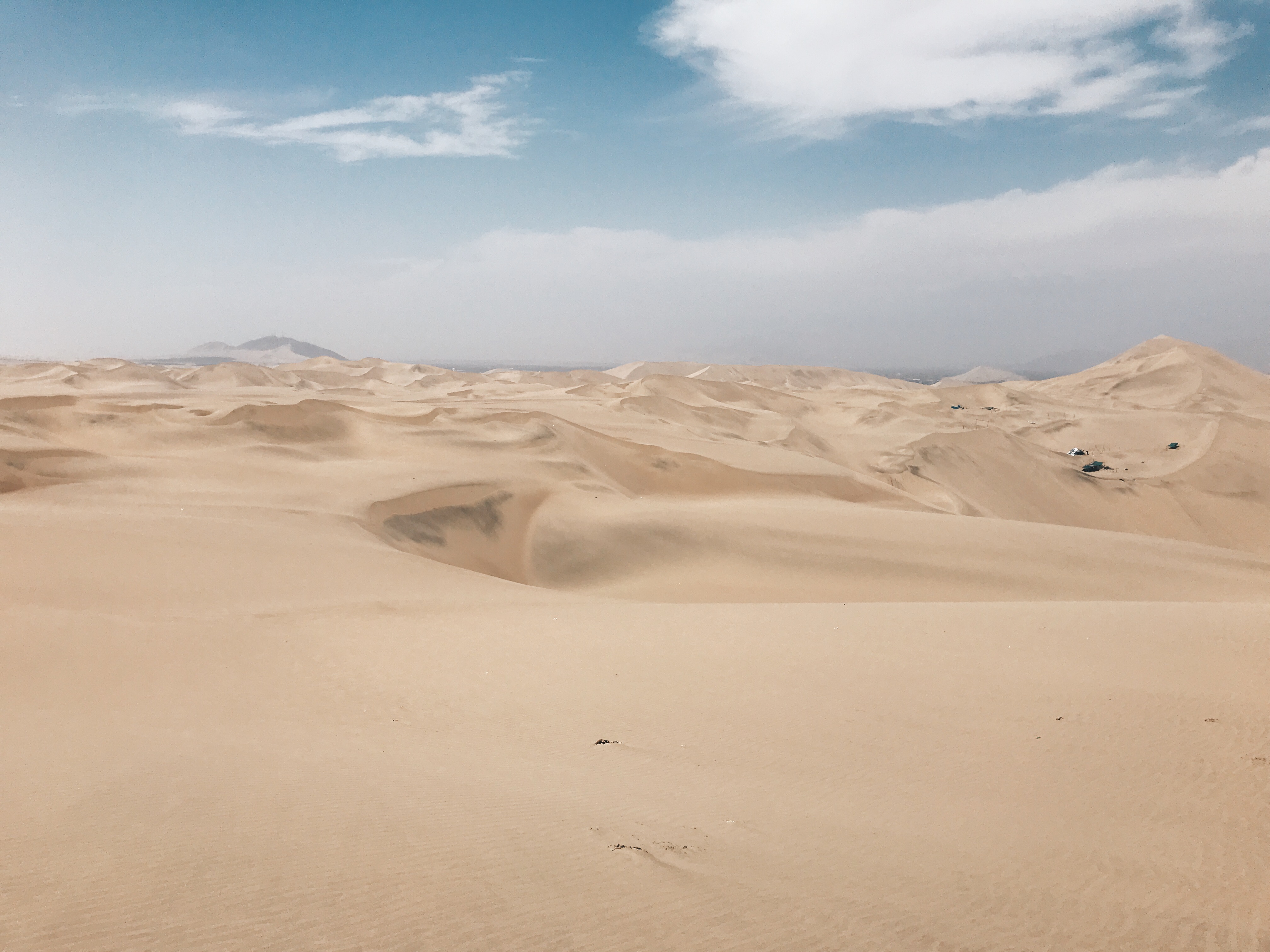
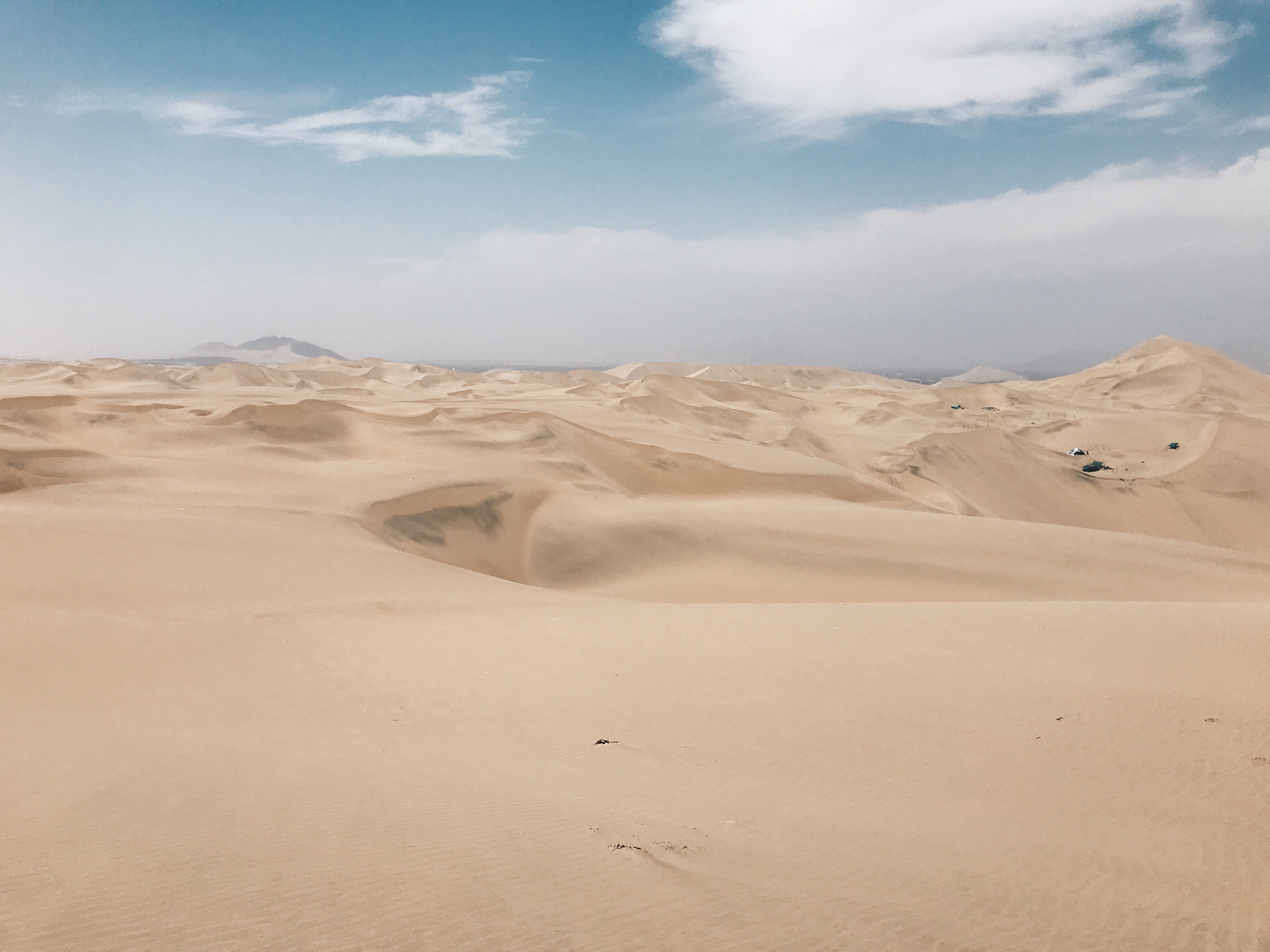
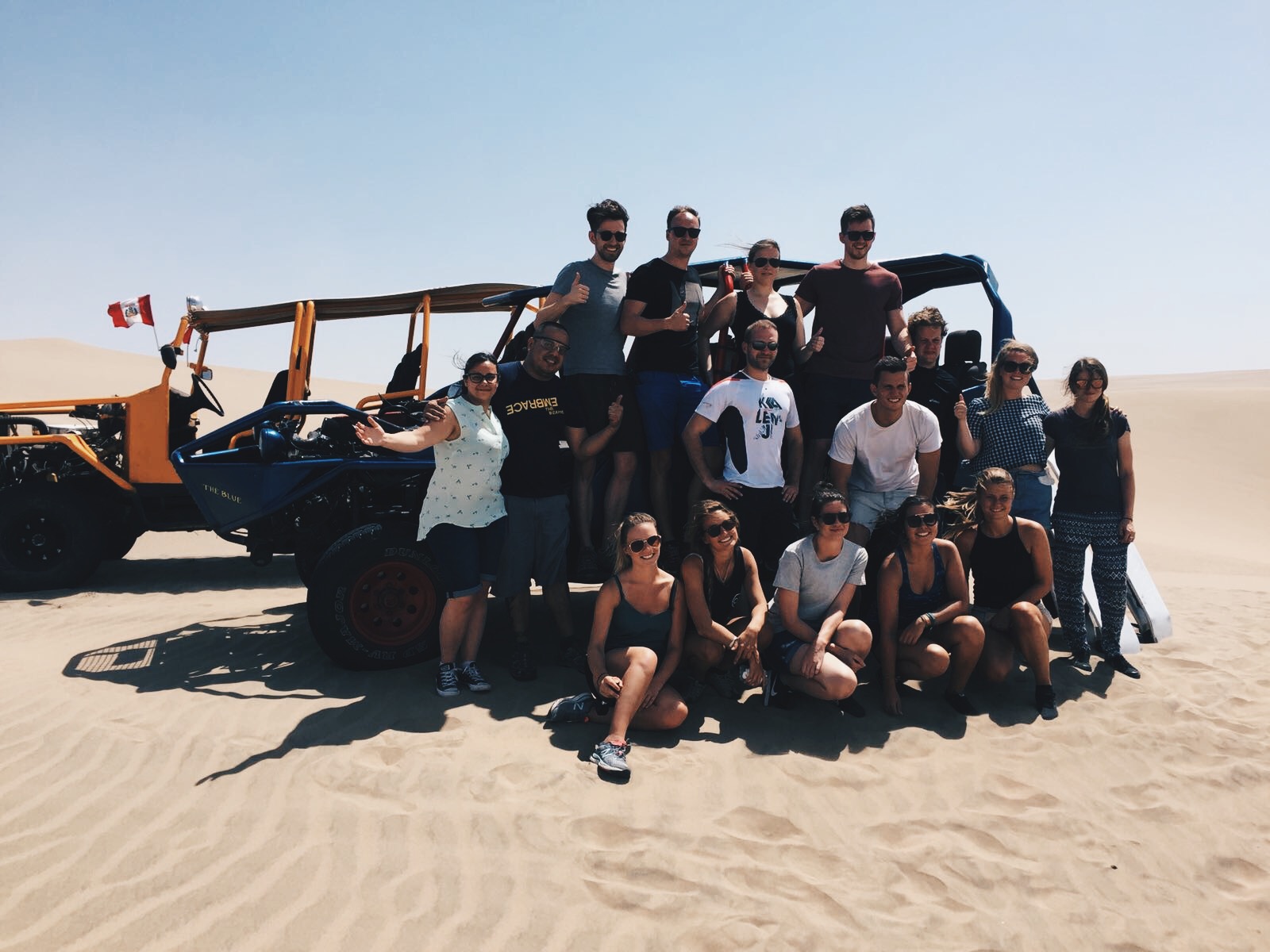
When the others got back from their activity we all got in a private bus and started a long day of traveling with a few stops along the way. The first stop of the day was at a winery where we were taught about the making of the local drink of pisco. We had a guided tour of the winery before moving on to a pretty extensive tasting session. There were a lot of good piscos and some very strong and less enjoyable ones. Our second stop was by far the best one. We stopped in the colonial town of Ica where we were to go sand buggying and sand boarding near the oasis of Huacachina. The group was split into two different buggies and the ride was surprisingly thrilling, kind of like a roller coaster. Every now and then we would get out of the buggy to go sliding down the dunes on a sand board. When standing on top of the hills I was more nervous than expected, but it turned out to be a lot of fun. We finished the activity by stopping at the oasis, where we could take some photos, before we went back to Ica for lunch. I was already starting to realise why it’s unfortunate being the only vegetarian in a big group travelling in Peru (apart from the very poor selection of vegetarian options in most restaurants, obviously), as I was consequently getting my meal last. This turned out to be the case for the entire three weeks I traveled with the group, but at least I was fed in the end.

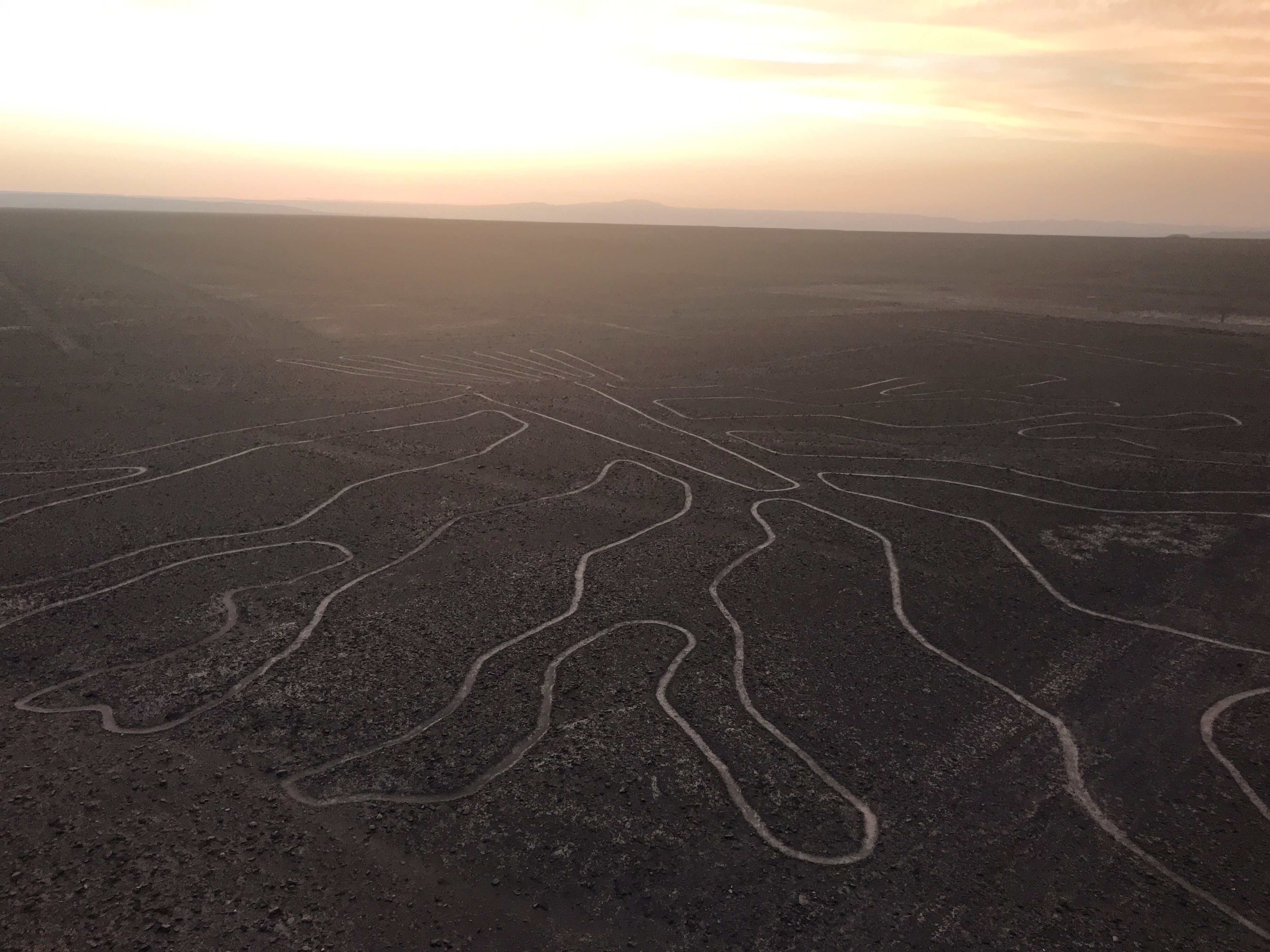
After lunch we got back on the bus, this time heading for our final destination of Nazca, a ride that took a few hours. We reached Nazca around sunset, and stopped one last time to enter a lookout where you could see some of the Nazca Lines. Such a weird and fascinating creation with no apparent purpose. When we finally got to our hotel we realised that it was located pretty far away from town so it appeared we would be spending a lot of time there during the next day. Luckily it had a pool and a restaurant. On the other hand it meant I never actually bothered to see the town of Nazca. A few of the others went and my impression is I didn’t really miss out. The highlight of the day we spent in Nazca was the local meal cooked for us for lunch the following day. The entire meal was prepared underground and featured lots of veggies and, obviously, lots of meats for the meat eaters, accompanied by a strange purple corn juice to drink. During our day stuck in our Nazca hotel the card games of “President and asshole” and “Shithead” were also introduced, and those two were to be played a lot throughout our time together. In the evening it was finally time to head to the bus station as our night bus to the lovely city of Arequipa was waiting.

--

♥  Erica

Huaraz and the amazing outdoor adventures that came with it

“I have some time to kill, I might as well make a stop in Huaraz to do some hiking”.

And that’s how my plan of spending a couple of days in Huaraz only to be able to visit Laguna 69, which looked so amazing in all the pictures, turned into seven consecutive days of hiking in very high altitude. If someone had told me before I left Norway that in a few months I’d find myself doing a five day self-guided trek in the Peruvian mountains, carrying my 57 litre backpack with tent, sleeping bag and food for the entire trek, I would have laughed them straight in the face, but there I was, and enjoying myself while I was at it. That inner mountain goat I discovered while in Ecuador came with me to Peru, and now more than ever got to unfold itself in the mountains. It is safe to say that I returned from the Santa Cruz trek exhausted, but content.

I’m not even sure when a one day tour of Laguna 69 turned into seven days of hikes and treks, but it certainly wasn’t my idea. I also never would have set up such an ambitious itinerary on my own. Peru did however give me the opportunity to meet up with friends I had made while hiking in Ecuador, and before I knew it we had made plans to encounter more land together. After a week of lazy living in Máncora I also figured I needed it.

We arrived in Huaraz an early morning after taking the night bus from Trujillo, and quickly jumped in a taxi up to our hostel. We were given our room immediately and caught up on some sleep, before heading out to explore the town and make plans for the upcoming days. By then we had already decided to do the four day Santa Cruz trek, but needed some information on how to best and most easily perform it. As Huaraz is set on about 3000 meters above sea level we were already feeling slight headaches due to the altitude, and were recommended to complete at least two days of easier hikes to acclimatise. We quickly decided to take this advice. We were also told that if we wanted we could incorporate the Laguna 69 hike into the Santa Cruz trek, and thereby turn the four day trek into a five day trek, and who can turn down Laguna 69? We certainly couldn’t, so five days it was.

Day 1 - Laguna Wilcacocha

The hike to Wilcacocha is known as an easy half-day hike, and is perfect for acclimatising. We enjoyed a basic hostel breakfast and made our way downtown, where we caught a colectivo to Puente Santa Cruz (not at all related to the Santa Cruz trek) where the hike starts from. The hike is basically uphill all the way, and eventually takes you to a laguna with a great viewpoint. We spent about 1,5 hours getting up there, and enjoyed some snacks at the top surrounded by a pack of hungry stray dogs. To be fair some of them were quite cute. After enjoying the view for a while we started the descent, which took about an hour. I wouldn’t call the hike spectacular, but it certainly was a good introduction to the high altitude hikes we had ahead of us.

Day 2 - Laguna Churup

Although Churup wasn’t the most impressive laguna I saw during my week of hiking, I am still tempted to say that this hike was my favourite out of all of them. It was simply a lot of fun getting there. For day 2 our little team had grown by two, so there were five of us meeting downtown at 7am to catch the colectivo to Pitek, which is where you start the hike from. This was our first day of hiking in the Huascaran National Park, and as the Santa Cruz trek and the Laguna 69 hike also takes place in this park, we had been advised to buy three-week passes that day. The three-week pass is the only option when spending more than one day in the park, even though six single-day passes (6 x 10 soles) would actually have been cheaper for us if this had been possible. Anyway, we got our passes and started the hike. For the first part it is mostly steep uphill, but for the last third of the hike you are literally climbing the mountains with the help of rubber cables that are attached to the rocks. Quite tricky at times, but a lot of fun. To get to the laguna we spent 1 hour and 45 minutes, and were quite proud of that accomplishment. We had the laguna all to ourselves for the longest time, before being interrupted by other hikers. We then started the descent, which we accomplished in about an hour, and caught a colectivo back to town. Another good acclimatising hike; our last one before starting our trek. This evening we spent preparing for the trek and renting the necessary equipment, before going to bed early as we had an early start the following day.

Day 3 - Laguna 69

Trekking time: about 5 hours, not including time spent at the lake.

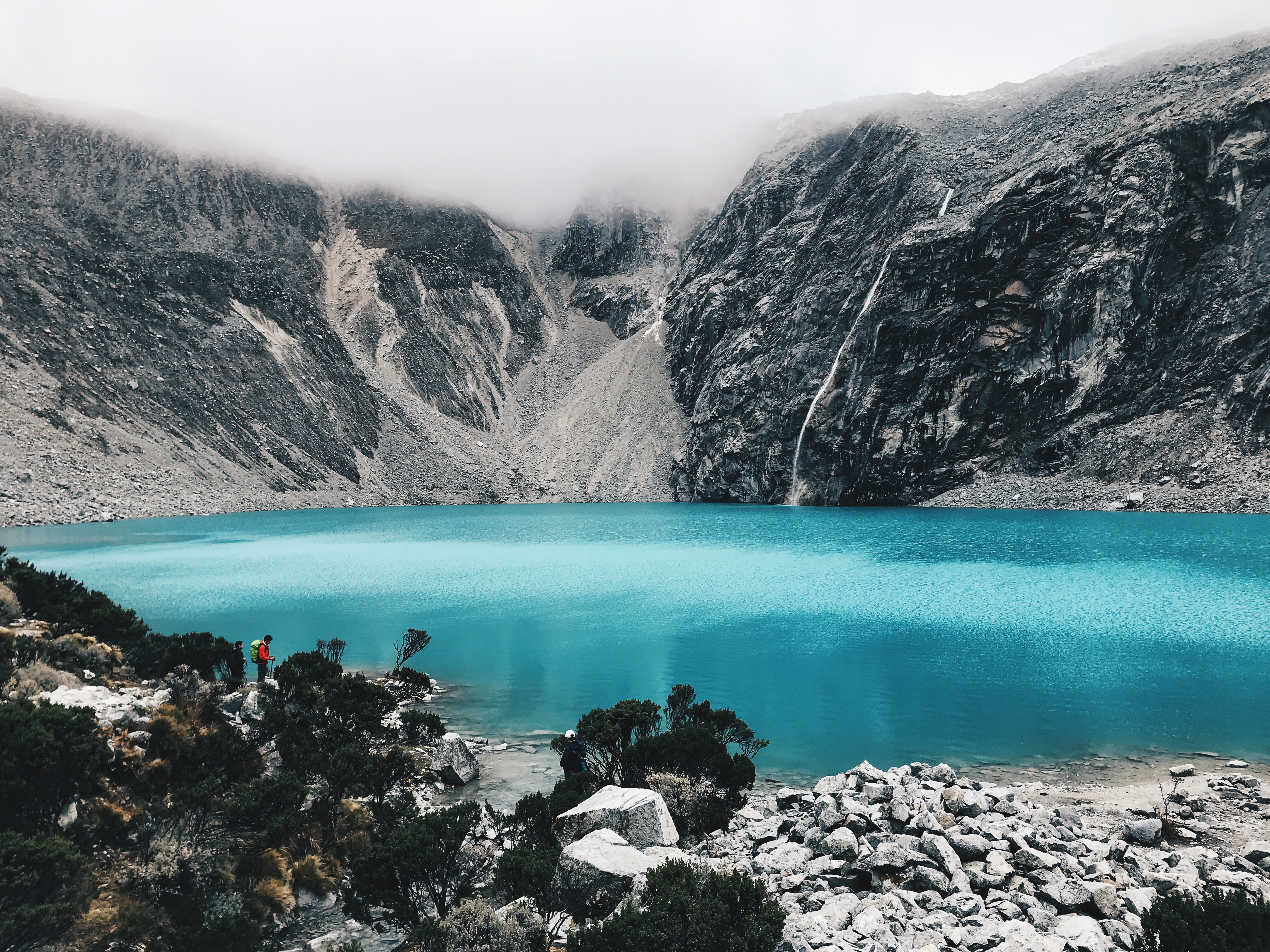
To make the first day of our trek as convenient as possible, we had actually signed up for an organised day trip this day. This meant we would get transport to the starting point of the hike and we were also able to leave our big bags in the bus while hiking. The hike to Laguna 69 is definitely challenging, so I was happy we did it this way. We got picked up at our hostel at 5 am and started a very bumpy bus ride that was broken up by a breakfast stop about half way. The breakfast wasn’t included and as we were trying to be well-prepared trekkers, we had brought our own bread, fruit and hard boiled eggs which we enjoyed in the bus. After breakfast we drove the rest of the way to the starting point and began hiking. The tour also included a guide, but as we found ourselves in a slow group we quickly left them behind and sprinted up the mountains being our mountain goaty selves. With the laguna being set at 4600 meters above sea level, it is safe to say that this hike includes some pretty steep hills and it was definitely our most challenging one yet. The feeling of being close to death, about to thirds into the final hill, is however quickly forgotten about once you turn the last corner at the top and is rewarded with the view of what might just be the most spectacular laguna of them all. It’s just so incredibly beautiful. While some crazy hikers opted to go for a dip in the lake, I was perfectly fine with just enjoying the views and snapping some beautiful photos. As we had completed the hike in only two hours we had plenty of time to do so while waiting for the tour group to arrive. Eventually we started the descent and made our way back to the bus. As we weren’t actually going back to Huaraz that day, we had our driver drop us of at a nearby camp site where we would spend our first night in the tents. We fired up our gas stoves to make some soup, and as the rain was pouring for most of the afternoon we were lucky enough to get to hang out in the park rangers cabin for a few hours. At around 7 pm it was already pitch dark and we realised that the upcoming days would call for some early evenings. We also realised that the nights in the tent would in no way be warm or comfortable. However, we just had to suck it up and consider it a part of the experience.

Day 4 - Vaqueria to the Paria camp site

Trekking time: 5 hours including lunch break.

The only good thing about uncomfortable nights in tents is that early mornings don’t don't make for much of a challenge. I was honestly quite happy about finally being able to get up when the clock struck 6:30 am. We had some oats and granola for breakfast, packed up the tents and started looking for a colectivo to Vaqueria, which we had been told would leave at 8 am. After nearly being fooled by a driver who claimed that all the colectivos had left, but that he could take us for a much higher rate, we were shoved into an already fully packed one, and were in for one of the most uncomfortable rides of our lives. I feared for my life at more than one occasion, as I didn’t actually have a seat in the van and would for sure be one of the first to go if we were to drive off the road. Luckily we all survived and were able to start the first day of the trek. The first part of the hike this day was downhill, and I think all of us silently cursed those descending hills as we knew this would mean even steeper ascending hills later on. Eventually we started climbing, and as we did the weather took a turn for the worse. Luckily, just as the rain started pouring we made it to a ranger station that provided us with some shelter while we had our lunch. The park ranger even offered us some boiled water for our tea and coffee while we waited for the rain to stop. When it eventually changed from downpour to slight drizzle, we took the chance on hiking the last bit, and were even surprised by some sunshine at the end of it. When we reached the Paria campsite we quickly set up the tents and sat down to enjoy the sun, a pleasure we were treated to for about ten minutes before the rain started pouring once again. Not ideal, as the campsite had no shelter whatsoever (even the “toilets” had neither roofs nor doors), so we had no choice but to hide away in our tents waiting for better weather. After a while it cleared up, so we spent the evening standing in a circle, as there was nowhere to sit on the campsite and the ground was all wet, all of us eating pasta out of the same kettle, as we had been too stingy to pay to rent bowls to eat from. And yet I was having the best time, really appreciating being out in the nature and enjoying the simple life with some great company. As the dark approached it got increasingly colder, and we eventually had no choice but to put on all of our clothes, curl up in our sleeping bags and call it a night.

Day 5 - Paria campsite to Taullipampa, through Punta Union

Trekking time: 8 hours including lunch break.

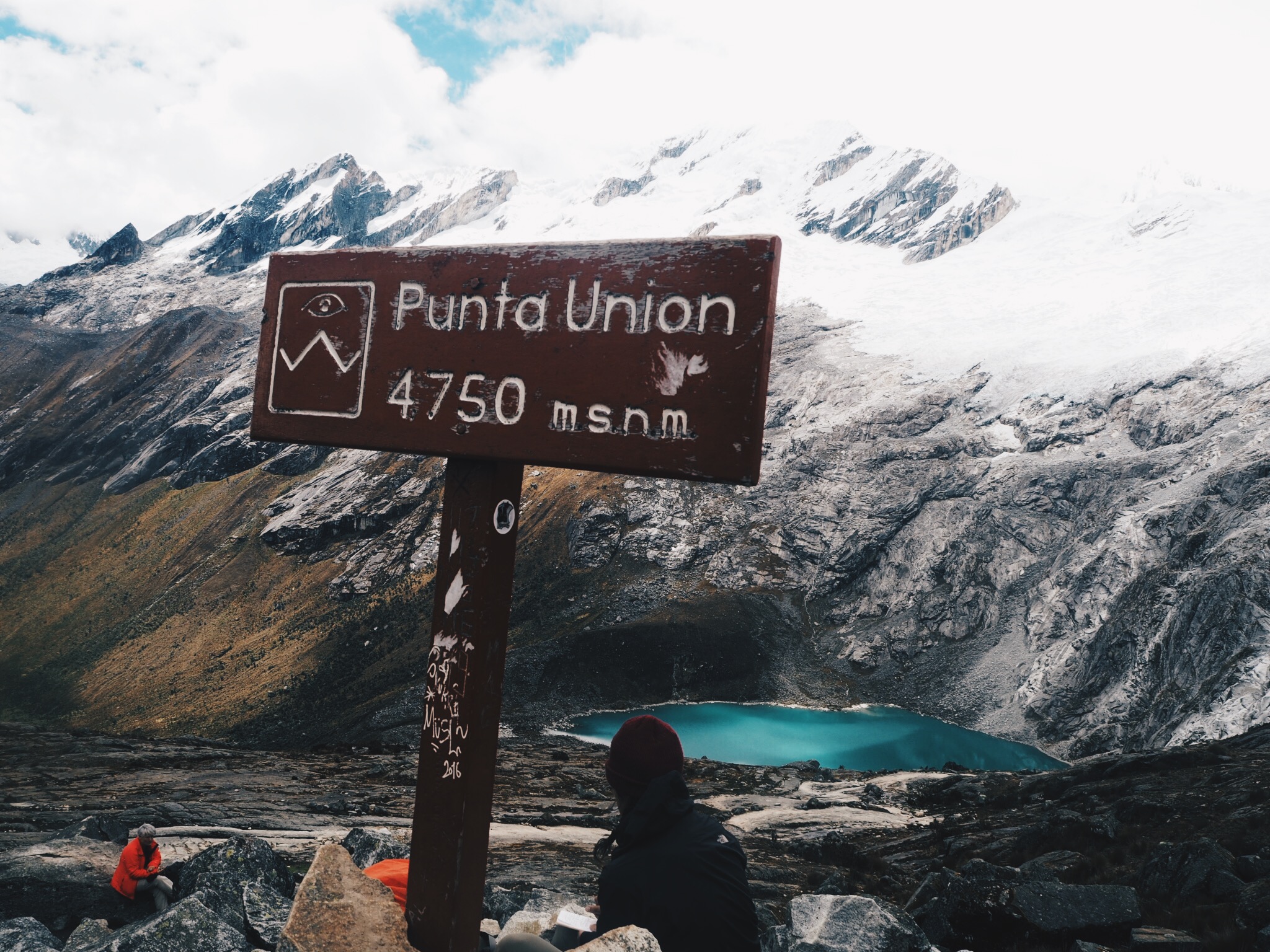
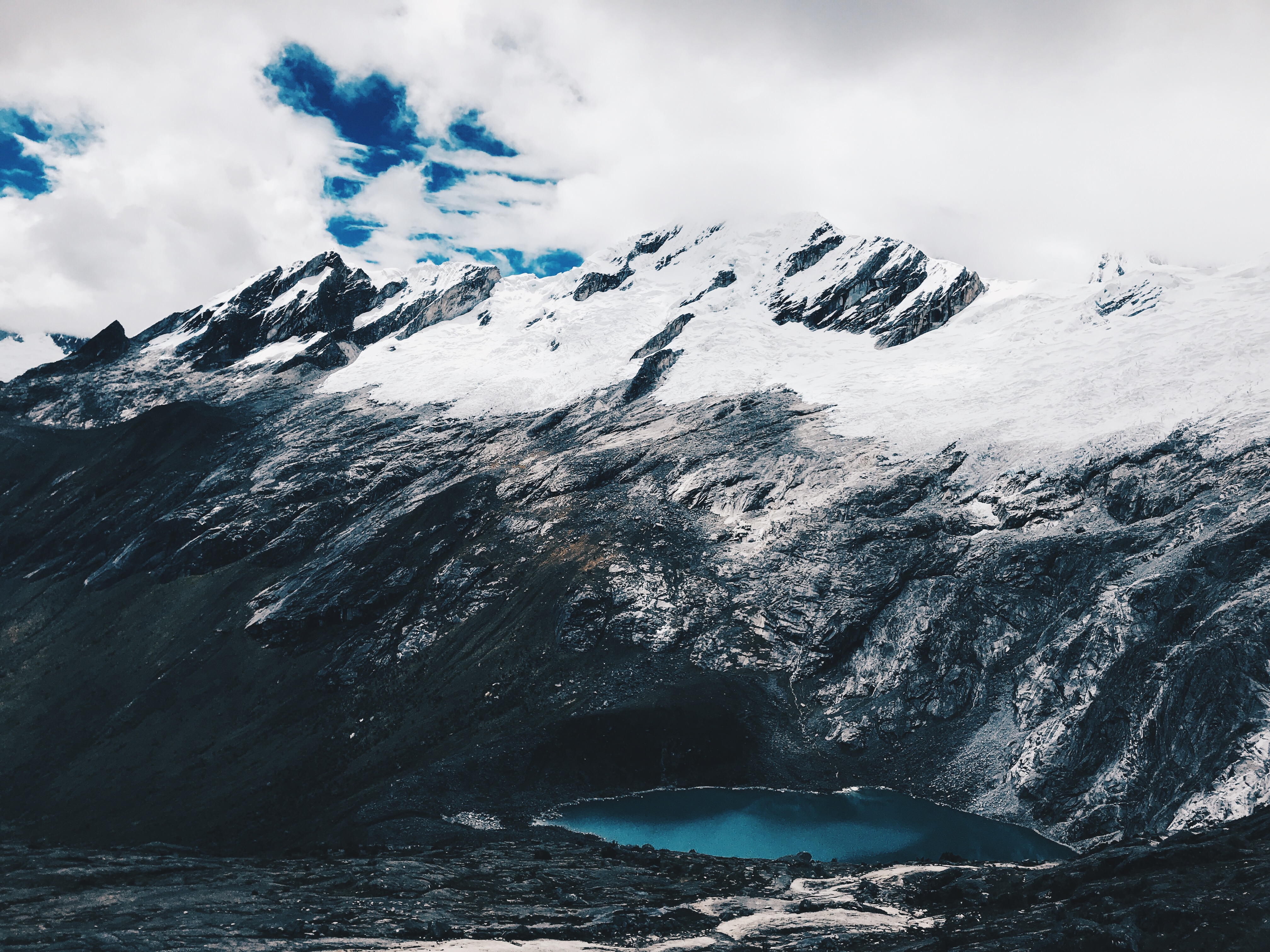
For the third day of the trek we wanted to start fairly early as we knew we were about to take on the hardest part of it. This day we would reach the highest point on the trek, Punta Union at 4750 meters above sea level, and accomplish an ascend of about 1000 meters to get there. We already knew it would be a long day, but had yet to discover that we ourselves would make it yet another hour longer by getting lost and wandering aimlessly around for the longest time, silently cursing whoever claimed that the Santa Cruz trek was excellently marked up with signs. It was when we finally found the hill we were supposed to be climbing that we were starting to get a grasp of how hard this day was actually going to be. This was one steep hill, and it would only get worse from there. We went from climbing hills to literally climbing mountains, and with every step we got increasingly higher. During one of our breaks we spotted the steepest trail going straight up a mountain and through a pass at the top, and tiredly joked about how we, at least, weren’t following that trail. It was funny until we realised that we indeed was. And also that it wasn’t really a trail, but more like climbing rocks up the mountainside. We all split up a bit on the way up, as we all felt the need to walk at our own pace. Occasionally we would ask each other how we were doing, and I kind of enjoyed getting replies like: “all good, well, except for the obvious sensation of being about to die any time now”. It really was that hard. But then you make it to the top and the adrenaline rush makes you forget all about it. That, and the amazing view you are rewarded with. We quickly fired up our stove to make some soup for lunch, and it didn’t take long before it started snowing. Just our luck! We tried to appreciate the fact that we had made it to the top just in time to actually get to enjoy any kind of view, as it was now all foggy, but the snow and the cold made it hard to appreciate anything at all. Also, we had spent 5,5 exhausting hours getting to the top, but the day was far from over. We still had a 600 meter decent ahead of us in not so enjoyable weather. The two hours we spent getting down to the campsite were long and unpleasant to say the least, and involved slipping and falling, freezing and getting soaking wet. Then, by some miracle, as we reached the campsite the sun decided to grace us with its presence. As a second miracle we happened to share campsite with a group on an organised tour, where the guide took pity in us and let us spend the entire evening in their food tent, even offering us tea and allowing us to use their big stove to cook on. At the time this couldn’t have been more appreciated. As one of us was also struggling heavily with the altitude it was good to have an expert around to ensure us that she would be perfectly fine, as we were already, slightly exaggeratedly, imagining the need of rescue helicopters to bring her back to civilisation. Luckily her poor state was nothing a long sleep couldn’t fix.

Day 6 - Taullipampa to Llamacoral, via Laguna Arhuaycocha

Trekking time: 8,5 hours including lunch break.

We woke up early and was pleased to realise that everyone was feeling great and fit for another day of hiking. As Reuben and Lara had been incredibly unlucky with their rented equipment they had decided to finish the trek this day, and therefore they set off in the early morning, while the rest of us would continue on as planned. This involved making a detour to visit Laguna Arhuaycocha before continuing on to our final campsite. Before setting out hiking our new friend, the tour guide, offered us their leftover pancakes for breakfast and I can honestly say that pancakes have never tasted better. After three days of unfortunate weather it was amazing to finally be walking in sunshine, and after the struggles of the day before we were now back in high spirits. The first part of the hike, up to the lake, took about 2,5 hours, and except for the last ascending part it was mostly flat. The lake was beautiful, and absolutely worth including in this day’s itinerary. We were alone up there for the entire time, the sun was shining and the lake was surrounded by beautiful glaciers. The only thing that would have made it even better was if we were actually able to spot the “Paramount mountain”, which can best be seen from up by the lake, but clouds ruined this for us. After spending a good 40 minutes by the lake we started hiking back to the main trail, heading towards the next and final campsite. For the next part the terrain changed, and it was almost like walking through a desert as we were walking on sand for the longest time. This was a really beautiful day, probably partly because it was sunny, but it was also just really nice hiking through this valley, surrounded by mountains, horses and donkeys, passing rivers and the occasional lake. It was, however, a really long hike, and reaching the campsite about 5,5 hours after leaving the lake was truly amazing. For once the ground was actually dry when we reached a campsite so we were able to sit down outside for a while, which was really nice. Small pleasures! What wasn’t so nice was running out of gas for our stove before making dinner and only having food that called for the use of a stove. Once again we were saved by a tour group, although nowhere near as friendly as the one from the day before, but at least we were able to enjoy our soup and pasta for one last dinner.

Day 7 - Llamacoral to Cachapampa

Trekking time: 2 hours and 45 minutes.

For the last day of the trek we had decided to get another early start in order to finish early. This would be the shortest leg of the trek, but is I wanted to catch a night bus to Lima that same evening it wouldn’t hurt to get back at a decent time. The hike was fairly easy and involved a few ups and downs, although nothing too challenging. We made the 9 km hike in less than three hours and hopped in a car that would take us to Caraz where we could catch the bus back to Huaraz. About halfway into the bus ride I think all three of us were equally convinced that hiking back to Huaraz would have been a preferable (and obviously totally unrealistic) alternative, as this was one of the most uncomfortable bus rides of my life. I was overly relieved when we finally arrived back in Huaraz. We walked back up all the hills to our hostel and prepared the leftover food we had for lunch, before taking our first showers in five days. I left that shower a new and improved human being.

I must admit I felt proud of the accomplishment that was this week of hiking, and so incredibly happy that I had tagged along for it. As I write this more than two months after leaving Huaraz, at the very end of my entire trip, it is also funny that this experience, coincidental and unexpected as it was, still stands out as one of my absolute highlights from all of South America. And to think that I hadn’t even heard of Huaraz or these amazing hikes until a few weeks before I performed them. I guess that is the amazing part of travelling without a set itinerary, being able to team up with other travellers and take advantage of their knowledge. I definitely learned a few things about myself while travelling, and part of it has to do with a up until now undiscovered love for being out in the nature challenging myself on unfamiliar grounds. Who would have thought that I turned out to be such a little mountain goat? Also, after completing this major challenge I felt more than prepared enough and more excited than ever about the Inca Trail, which was only two short weeks away.

--

♥ Erica

Máncora

As I left for the airport to head back to the mainland from The Galapagos, my main aim was to catch a night bus to Mancora that same evening. Getting an email about a 1,5 hour delay of my flight definitely wasn’t a part off my plan, but being the cheap backpacker that I am I still left for the airport on the last possible bus, which leaves as early as 8am. That would give me about five hours of waiting at Seymour Airport, but also save me 20 USD so I decided it was worth it. Upon arrival at the airport I was informed that my flight was another 2,5 hours delayed and I started suspecting that I was going to miss my connecting flight in Quito, which might mean I would have to spend the night there. So not ideal. Slightly stressed I went to the check-in counter, prepared to beg them to put me on the earlier flight that they had that day which I would just be able to make due to that flight also being delayed. Luckily for me the man behind the counter suggested the very same option that I had in mind right away, and no begging turned out to be needed. Suddenly I had a direct flight to Guayaquil instead of having to stop by Quito, and would arrive with plenty of time to sort my night bus out. I guess sometimes things just work out, and I felt extremely pleased with myself for choosing the early bus rather than a taxi at a later time, as that is what made these changes possible. My stinginess was rewarded.

Once in Guayaquil I booked myself onto the 9pm bus to Mancora with the company CIVA. I had heard mixed things about this company, but they seemed to be the best choice at the time, and I had a great experience crossing the border to Peru with them. We arrived at the border around 00:30, had our luggage checked, stamped out of Ecuador and into Peru and got back onto the bus. An 1,5 hour border crossing in the middle of the night is never amusing, but I still don’t think things could have gone any more smoothly. The town of Máncora is about 2 hours away from the border, so I arrived around 4am, walked down the street to my hostel and was luckily able to check in and get a bed right away. It was great getting a few hours of proper sleep before starting the day.

The following days were lazy, just like I wanted them to be. My plan of trading the Ecuadorean coast for the Peruvian one to get as much sun as possible seemed to be working, and as my hostel was more like a resort than a hostel I didn’t really have to move around much. The days were spent lying on the sun bed, participating in different activities, taking strolls on the beach and having relatively healthy food in the hostel restaurant. Amongst backpackers Mancora is known as a party town, and as I for once had decided to book myself into a party hostel, the first few evenings were spent consuming alcohol and playing drinking games. I lasted in the hostel for almost three days, before deciding on going somewhere calmer, and felt a bit old for a minute before appreciating the fact that I’m growing up. It was fun while it lasted.

Two nights later I found myself back in my old dorm in Loki Hostel, this time sleeping in my bikini in a random empty bed, to avoid a dodgy walk back to my hostel at 3am. I’ll admit I spent a second asking myself why I even left, as I headed back in the morning to collect my free breakfast. To be fair Psygon Surf Camp turned out to be a way better fit for me than the Loki, and I enjoyed being able to start my days with a yoga class or a Muay Thai lesson, before having amazing sushi for lunch in the hostel restaurant. By the end of the week a couple of old travel buddies were set to turn up in town, so I waited around for them and by that ended up spending a whole week in Máncora. Probably too much time spent in a town that offers nothing but beaches and parties, especially when you don't surf or kitesurf, but I still had a good time relaxing and reuniting with quite a few friends during my time there.

--

♥ Erica

Travel summary: Ecuador

First some statistics:

Days spent: 21
Beds slept in: 13
Hammocks slept in: 1
Places visited: 9
Night buses taken: 1
Day buses taken: 6
Items gotten rid of: 0
Items stolen: 0

---

For some reason I was really excited about going to Ecuador. In every city I did research on there were so much that I wanted to do, and as I left Colombia later than planned due to falling in love with the country, I was somewhat stressed about not having enough time to do everything I wanted in Ecuador. And yet I ended up cutting my stay short and leaving Ecuador after only three weeks, even though I definitely wasn't in a rush at that point. I don't blame Ecuador for that at all, though, because my stay was really good while it lasted. It just ended with a combination of bad timing season wise and me feeling quite ready to go at that point, so why push it? I had nothing but a great time during my three weeks in Ecuador.

My stay in Ecuador was quite different than the one in Colombia. For once it was way more activity packed, which makes it a lot easier to point out the highlights. From climbing up and mountain biking down volcanoes in Quito, trekking the Quilotoa Loop and abseiling down waterfalls in Baños to snorkling with sharks and sea lions and staying in home-made houses in the Galapagos; I feel like I certainly made the most of my time there. A second big difference from Colombia was that I shared most of my experiences in Ecuador with the same group of people, and I quite enjoyed this stability after traveling on my own for a while.

What did eventually make me leave Ecuador earlier than planned, was the bad weather on the coast in the end of September/beginning of October. Without doing my research I was ready for a few weeks of sunny beaches, but people I met informed me that at that time of the year I would find no such thing. I'll admit that I was a bit upset about this, but as I craved sunshine my best bet seemed to be heading straight for Máncora and Peru, and so I did.

Traveling in Ecuador:

After being really impressed with the buses in Colombia, the ones in Ecuador were a bit of a let down. Luckily the distances are shorter as Ecuador is a small country, so you rarely have to stay on them for long. Eventually you'll get used to buses with no a/c, the constant stream of sellers being let onto the bus and the chaotic bus terminals, and suddenly getting around isn't so bad after all. Also, a big advantage is that traveling by bus in Ecuador is incredibly cheap. That kind of makes you able to live with the occasional lack of comfort for a couple of hours. An important point about traveling by bus in Ecuador, however, is that you have to watch you're belongings a lot closer than in, for example, Colombia. What is good is that the people of Ecuador actually realise that they have a problem with theft on buses, and I lost count of how many times I was instructed, either by local travellers or bus company employees, to keep my backpack on my lap and carefully hold on to it. I was fortunate enough to never have anything stolen during my time in Ecuador, but I met people who weren't as lucky, usually because they kept their bag on the floor or in the overhead compartment. So keep your carry-on on your lap during bus rides. A bit uncomfortable over time, but trust me, it's worth it!

Costs of traveling in Ecuador:

My first impression of the price level in Ecuador wasn't the best. After five weeks of spending next to nothing in Colombia, Quito struck me as such an expensive city. However, this was mostly because I engaged in more organised activities while in the city, which is obviously more expensive than taking advantage of local transport. You pay for the convenience. For a meal in Ecuador I usually paid 5-10 USD, and you can't really complain about that. As long as you're not a vegetarian there is also a huge variety of really cheap street food available, which my friends could definitely vouch for. Apparently the use of USD in Ecuador upper the price level, as the Ecuadoreans are in no control of their own currency, but to be honest I still found the country really cheap. The week I spent in the Galapagos, however, is a different story, but I obviously knew this before I decided to go there. More than half of the money I spent in Ecuador was in fact spent in the Galapagos, but it was totally worth it.

Traveling as a vegetarian in Ecuador:

My biggest struggle with being vegetarian in Ecuador turned out to traveling in a group. The hostels along the Quilotoa Loop all caters to vegetarians, and it is my impression that most Ecuadorean cities have good vegetarian restaurants, if you do your research and at times are prepared to pay a little extra. One of my favourite vegetarian meals of my entire trip was in fact had in Ecuador, more precisely at Casa Hood on my birthday in Baños. Traveling with cost-oriented backpackers who preferred eating street food, on the other hand, did present me with a bit of a challenge and several meals of solely French fries were had. As for the menu del dia the restaurants were usually happy to replace the meat with a vegetarian protein such as beans, lentils or an egg, but I feel like I definitely benefitted from being able to speak some Spanish in order to make this happen. When it comes to Spanish skills, conversations concerning food orders have definitely become my strong suit.

--

♥ Erica

The Galápagos Islands

After two days of doing absolutely nothing in Cuenca and getting way too comfortable at Mi Casa Hostel, it was time for new adventures. I caught a 5 am bus heading for Guayaquil, only to catch a flight to one of my dream destinations in South America. I was treating myself to a week in the Galápagos Islands. I had been going back and forth for weeks wondering whether it be worth it spending so much money in one place over one week. Eventually I decided that I might only be in Ecuador once, and that this was something I really wanted to do. As I also decided against spending additional money on a cruise, I realised this week might not kill my budget after all.

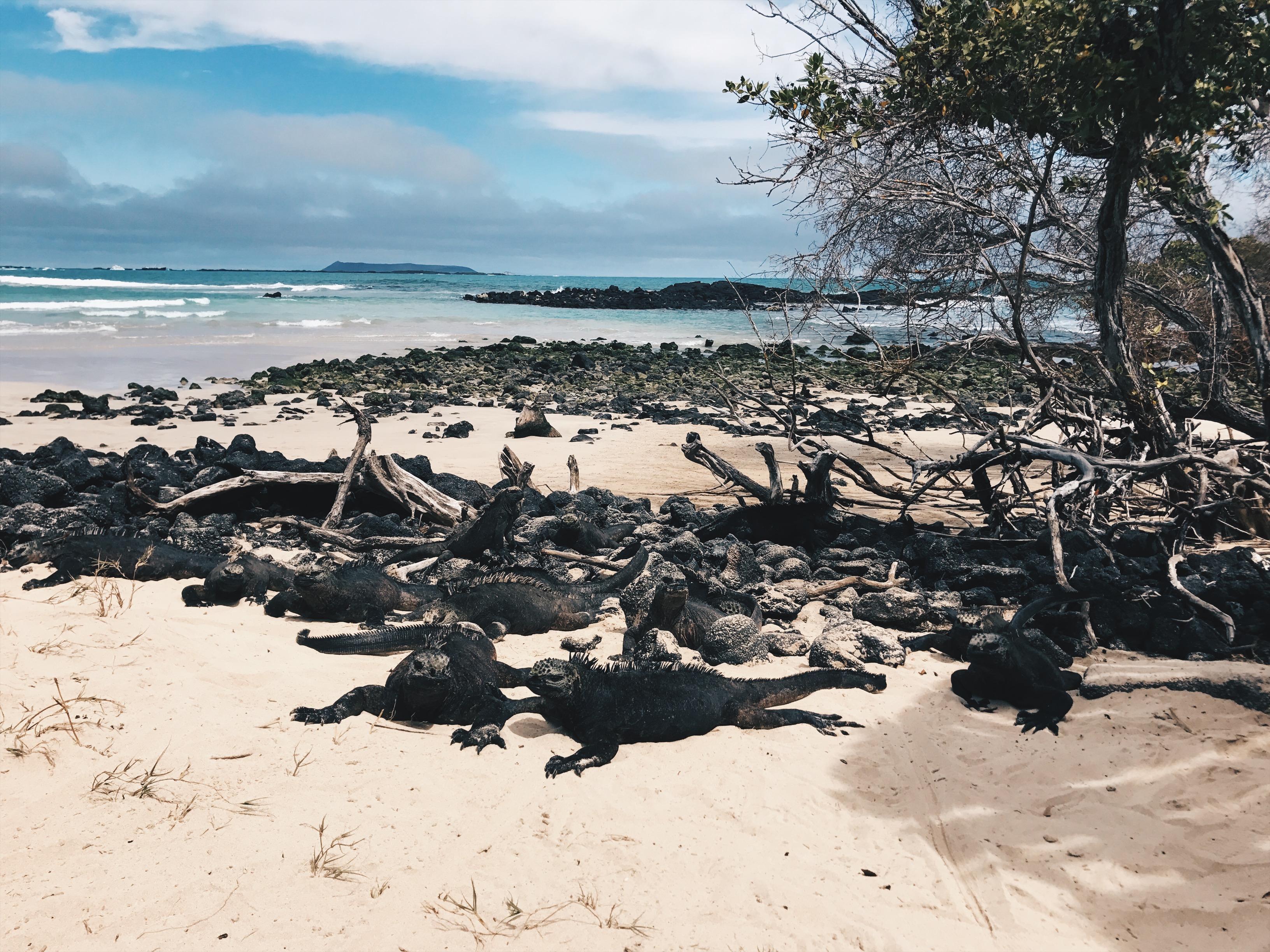
The flight from Guayaquil to Baltra was short and sweet, but even before exiting Baltra airport the costs started adding up. In your departure airport you need to pay a 20 USD tourist fee (little tip: this has to be done before checking in your luggage. Get this right right away to avoid queing twice, like I may or may not have done) and when you arrive you're being charged an additional 100 USD as a national park fee. Bring cash as it is not possible to pay with card. Getting from Baltra to Santa Cruz Island, where a lot of people choose to stay, is easy, but also done in several legs. First you get a free airport bus from the airport to a ferry. This takes 5-10 minutes. You then get the ferry over to the island for 1 USD. Once you've made it to the other side you have the option to choose between a 25 USD taxi or a 2 USD bus to the town of Puerto Ayora. I obviously opted for the latter and it took about 45 minutes. It was already late afternoon when I finally arrived at my hostel, so for my first night in town I just wandered around, visited the Charles Darwin Research Centre and appreciated the sights of birds, iguanas, sea lions and baby sharks. They're all so chilled as if the island belongs to them, and I guess it really does.

I started my second day in Puerto Ayora by meeting up with Julia, who arrived back from Isla Isabela that morning. We had decided to visit Las Grietas, which in Spanish means "the cracks" as it literally is deep cracks in the volcanic landscape filled with crystal clear water, and also only short water taxi ride and hike away from Puerto Ayora. On our way we came across a pink, salty lake and Playa de los Alemanes, before making it to the beautiful cove. I went for a swim and spotted fish swimming underneath me as I made my way through the water. We then had a brief pit stop at the hostel, just in time to welcome more friendly faces to our dorm. Stewart and Priyanga returned from their cruise and with that four out of seven from our Quilotoa hiking group had reunited in the Galapagos. Not a bad accomplishment. We spent the afternoon in the beautiful Tortuga Bay (which didn't have any turtles), just sunbathing and enjoying, for my part, forced dips in the ocean.

The morning after Julia left for her cruise, while the rest of us caught a speed boat to Isla Isabela. We had been warned that seasickness wasn't uncommon as the ride gets very bumpy, but we all made it across the ocean alright. In Isabela we met up with our host for the next two nights, a guy Julia had randomly met on the beach and put us in touch with, and who was kindly offering us the top floor of his self-designed house. We were trading beds for hammocks and walls for, well, no walls, but couldn't help but admit that it was a pretty cool place to stay. The boys even invited two more friends to come stay with us, and apart from freezing nights we had a great time in Isabela. The first day we rented bikes, and took on the 20 km trail to Muro de las Lagrimas. Along the way there are several places you can stop, to visit miradors, caves, beaches and so on. The 100m-long wall made out of lava rocks is the only remaining evidence of the penal colony that held convicts under harsh and abusive conditions between 1945 and 1959. The wall is said to have caused thousands of deaths during its construction. On the way back we stopped by a flamingo lake and a tortoise breeding centre, before returning the bikes and meeting up with our two other roommates, our host and a few of his friends to enjoy a family style meal. Being in the company of locals is always good, and we were taken to cheap but good restaurants we definitely wouldn't have found on our own. The night ended with a few beers and a bonfire in a pit right outside the house, because why not.

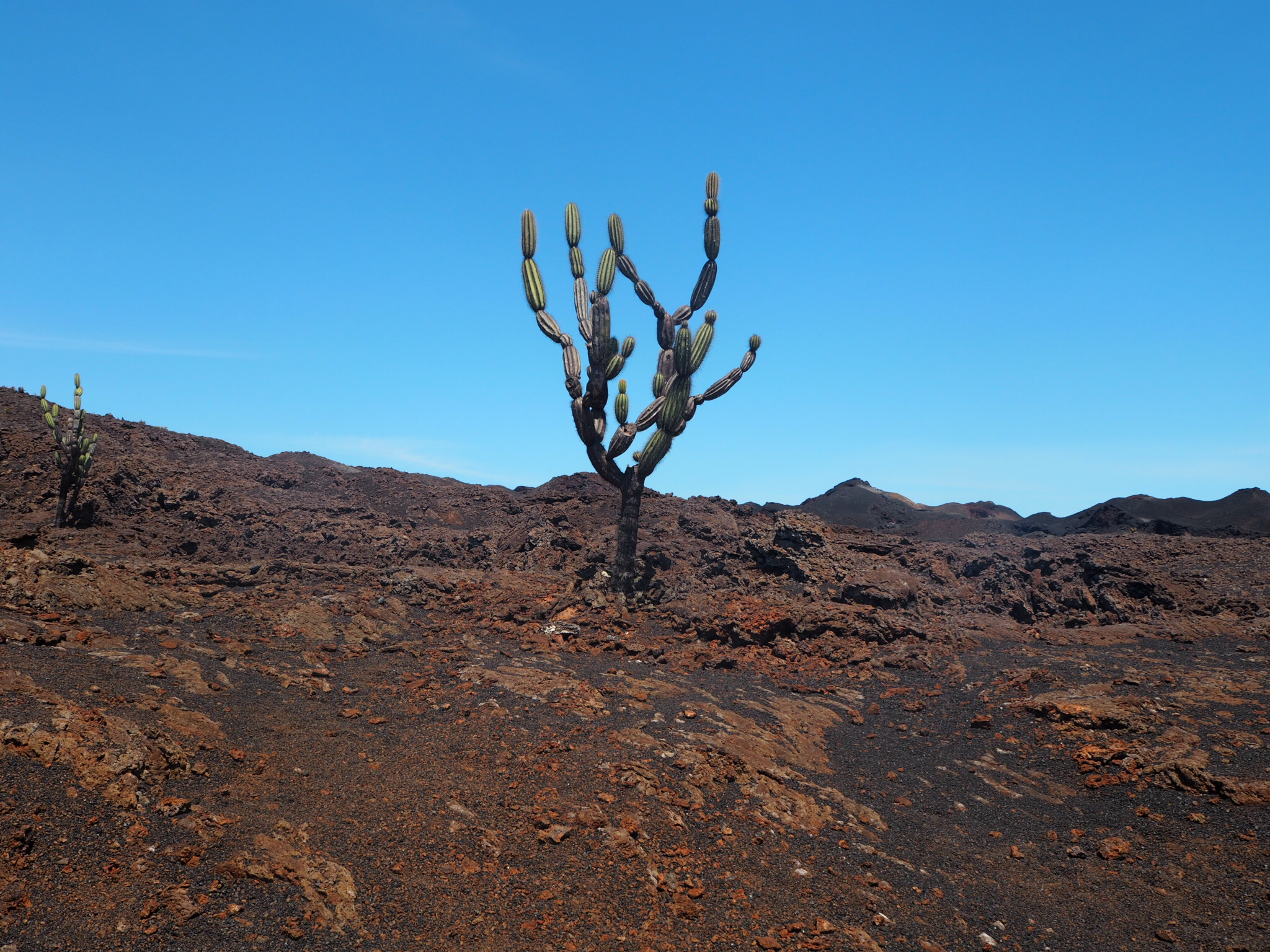
The following morning we were up around 7 am as we had booked a guided tour to Volcán Sierra Negra and Volcán Chico, where we were hiking about 10 km each way. Compared to the hikes I've taken recently the terrain was fairly easy, but the long walk in the burning sun was tiring nonetheless. Walking on top of volcanoes is really cool and we were rewarded with some pretty decent views. After the tour we were all shattered, and ended up trading beaches for hammocks for the next few hours. We then had to break in to our host's friend's house to shower, as our house lacked water that day (the struggles of staying in home-made houses), before having yet another good dinner.

Another cold night in the hammock was followed by yet another early rise. We had booked a snorkling tour to Los Tuneles, and were picked up at 7:30 am. Los Tuneles is known to offer the best snorkling in Isla Isabela, and it was quickly confirmed that lots of different species awaited us that day. As I hadn't done much animal sightings yet, it is safe to say that I was excited. Unfortunately it was a cold day, so we had to dress properly for the boat ride and wear wet suits for snorkelling. The cold water made me enjoy the snorkelling a bit less than I would otherwise, but it was still pretty amazing to swim amongst turtles, sharks, sea horses, stingrays and other types of fish. Our guide was knowledgeable and seemed to know where all the different species were hiding. We also had a quick guided tour by land, where we were introduced to the blue footed boobie that is very typical for Galapagos. Despite the chilling temperatures it was a great tour. When the tour finished we headed back to the house to collect our stuff, as we were catching the afternoon ferry back to Puerto Ayora. Our return to Puerto Ayora called for another interesting living arrangement. The other four had booked a room for four people in advance, before knowing that I would be there as well. We decided that I'd go with them anyway, to see if we could trade their room for one that would fit five people. We quickly learned that they had no such room, but in my poor Spanish I still managed to convince the receptionist to let us stay five people in the four bed room. We just figured we’d sleep three people in the double bed. In theory a good plan, only the double bed turned out to be tiny even for two people. In the end the boys literally picked apart the two single beds and laid the mattresses on the floor so the three of them could sleep there while Katie and I, being the two smallest out of the five of us, slept in the double bed. Definitely not the easiest solution, but I appreciated them making such an effort to have me staying with them. It was also quite interesting having to deal with getting electric shocks from our shower as we couldn't notify the staff about its broken condition when we had turned our entire room upside down. It definitely gave us a few laughs and luckily we all survived. 

We woke up to what was going to be my last full day in the Galapagos, while the others were all catching a flight that day. I waved them off and set out on a day trip to Santa Fe, where I was hoping I’d get to snorkel with sea lions. I got slightly stressed when I turned up to the travel agency that I’d booked the tour with and it was closed, but after waiting for about 15 minutes a guide turned up to get me. For once it was a warm and sunny day and the time spent on the boat was truly enjoyable. I was eager to work on my tan, so I spent the entire day on the sunny parts of the boat while the rest of the group for some reason remained hiding under the roof. When it was finally time to get in the water the guide asked the group which ones who considered themselves decent swimmers. To my surprise it was only myself and a Dutch couple who raised our hands, while the remaining seven were wrapped up in life vests and got handed floating equipment. It definitely wasn’t an ideal situation. Us three decent swimmers were told to stay together and basically went off on our own, as the guide had to help the others into the water. Snorkelling wise the conditions was so much better than the day before. The water was amazingly clear and there were fish and turtles to be seen everywhere. That the water was also a lot warmer didn’t hurt and I was surprised at how much I enjoyed myself. I am usually not the biggest fan of snorkelling, but the first hour in the water flew by and suddenly we were called in for coffee and snacks. We were then taken to a different part of the island for more snorkelling. The sea lions were waiting. Unfortunately most of them were too lazy to come out and play, but we got to swim around with a few and it was amazing. They are so cute and playful, and definitely not afraid of humans. We even spotted the Alfa male; an angry, barking guy that was probably bigger than me. We were told to be careful around him as he gets protective of the kids and females, and I was perfectly fine with just watching him from a distance. We ended the day at the beautiful Playa Escondida, and even though I at first didn’t see why we would bother to spend time watching iguanas on a beach, I understood once we got there. It is probably one of the most beautiful beaches I have ever visited. We spent a good hour strolling around, watching the spitting iguanas and taking in the scenery before returning to the boat and heading back to Puerto Ayora. The sun was with us the entire day, for the first time during my stay in the Galapagos, and I’m pretty sure this was my favourite day there. Even though I wished for more time to explore, I spent the evening getting ready for an early departure and a long day of travelling the following morning, a trip that didn’t exactly turn out the way I’d imagined.

Even though I didn’t do a cruise, I am pleased with my stay in the Galapagos. I ended up seeing almost all the same animals as the people that I’ve spoken with who did do a cruise, and as I only had five full days on the islands I definitely got the most out my stay by doing it this way instead of spending time searching for last minute deals, travelling back and forth to the cruise and so on. A five day cruise, which is what I would have had to take, does in fact only include three days of activities, as the first day is only spent on the boat and you get back very early on the fifth day. Spending 1000 USD on that just didn’t seem worth it to me. The people I know that did five day cruises did however seem happy about that, so I guess it’s a matter of personal preference. If I were to do anything differently, I would rather make sure that I’d stay for at least ten days. Five days simply wasn’t enough. If I was to return to the Galapagos I would probably also choose a different month than September, where the weather is more stable and the temperatures slightly higher. Then again, I’ll most likely never go back. I feel like the Galapagos is the kind of place that I’ll only visit once, but I sure am glad that I did.

--

♥ Erica

Baños

The day I was gonna make my way from Latacunga to Baños started with a relaxed breakfast. We were a group of five heading for Baños that day, and we were all equally convinced that direct buses ran quite frequently. It's only a two hour ride so they should be, right? At the bus terminal we were told otherwise. After some confusion were sent of on a bus to Ambato where we were told that we would find a connecting bus. That didn't quite happen. After being told different things by a numerous amount of people and having run all around the terminal, it appeared that there were no buses leaving for Baños anytime soon. Only moments later we were suddenly shoved into a fully booked bus headed for Baños, after paying 0,20 USD for a ticket we didn't really understand. Apparently this is what they do around here when there are no available buses; they charge a small fee for taking people a part of the way, to somewhere where they'll be able to catch local buses to their final destinations. We were therefore soon thrown out on the street, with a promise that a bus to Baños would appear within the next fifteen minutes. Luckily it did. Altogether the trip from Latacunga to Baños took about three hours, which isn't at all that bad, but this still makes for my most interesting bus journey thus far.

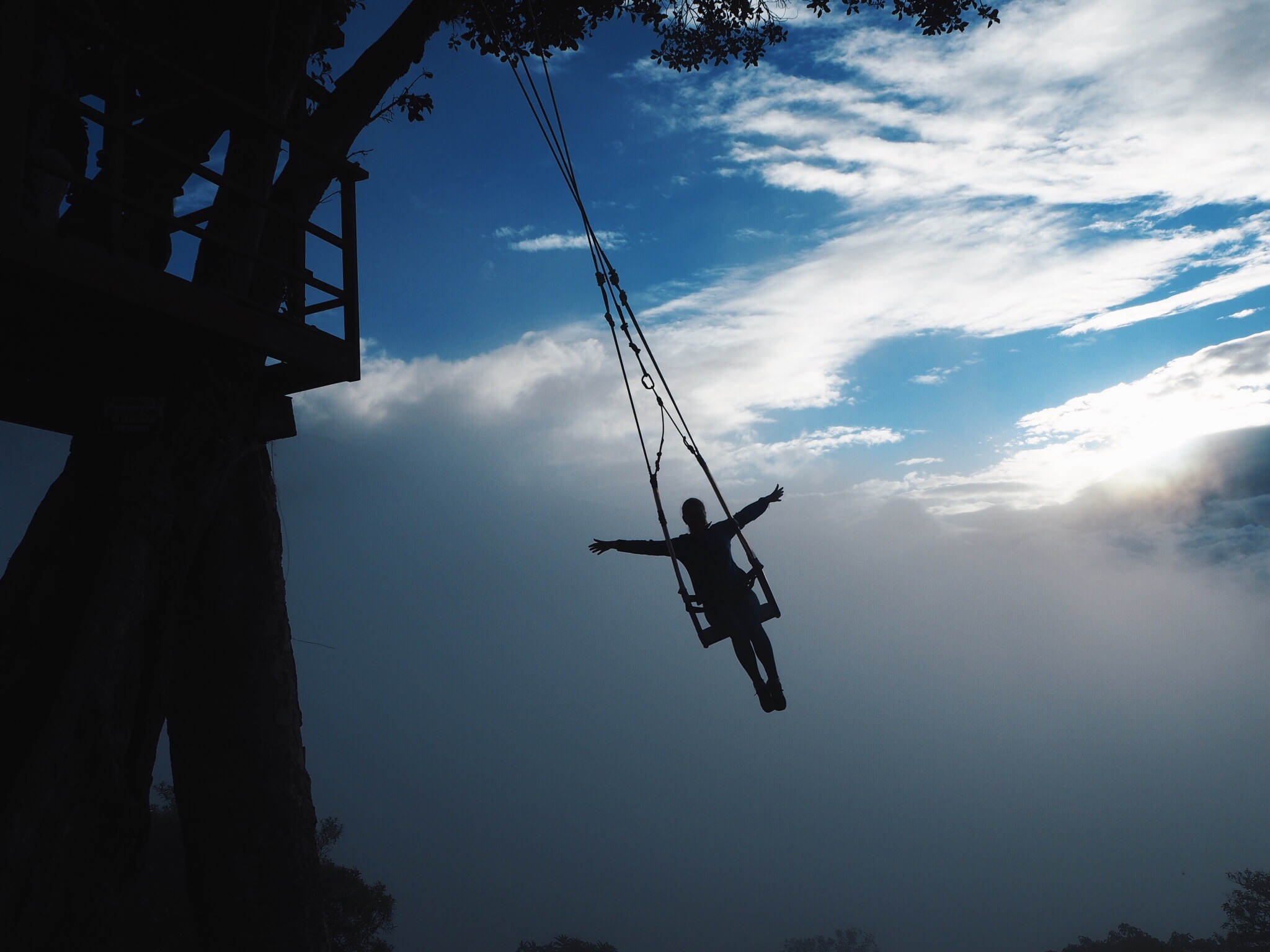
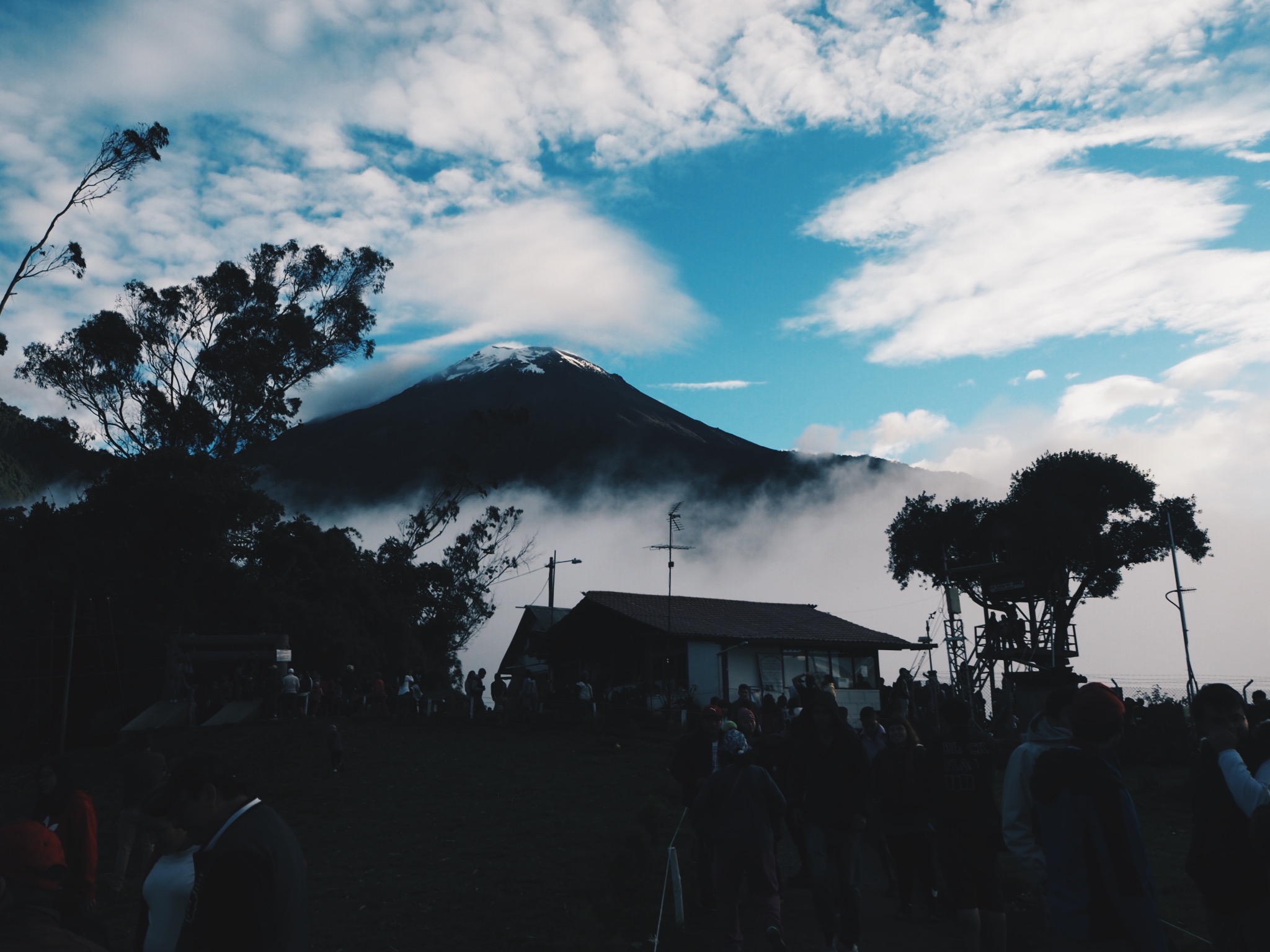
When finally in Baños we found a hostel and went off to explore. My number one priority in Baños was to get my picture taken on the swing at the the end of the world, and we decided to get this done sooner rather than later. After discovering that the buses up to the swing stopped running at 4pm we squeezed five people into a taxi, for which we paid 20 USD. This covered a return ride plus the driver waiting for an hour while we swung. I don't know what I expected from Casa del Arbol, but it certainly wasn't what actually met me. After paying 1 USD to enter, we walked into a park with lots of swings and lots and lots of people. I've seen dozens of idyllic pictures taken from Casa del Arbol, and although I wasn't surprised it was still a bit disappointing that the site looks nothing like that in real life. Oh well, I got some cool photos which was kind of the purpose all along.

I'd been wondering where I'd wake up on my 26th birthday, and Baños ended up being the place. Although I don't care much about my birthday, it was still nice having people that I knew to spend the day with. My friends bought me a birthday cake, sang for me and forced me to have a better meal in a restaurant as "you can't only eat fries for your birthday". It was very much appreciated.

For the day we rented bikes and set off on a 20 km ride to the waterfalls in the area. Although the rain was pouring for most of the ride, it was still an enjoyable day. As we were already soaking wet, there were also no reasons not to explore the waterfalls up close. I believe my shoes were wet for a week afterwards. After reaching the end of the trail we decided to pay a truck to take us back to town. I was glad to escape all that uphill biking.

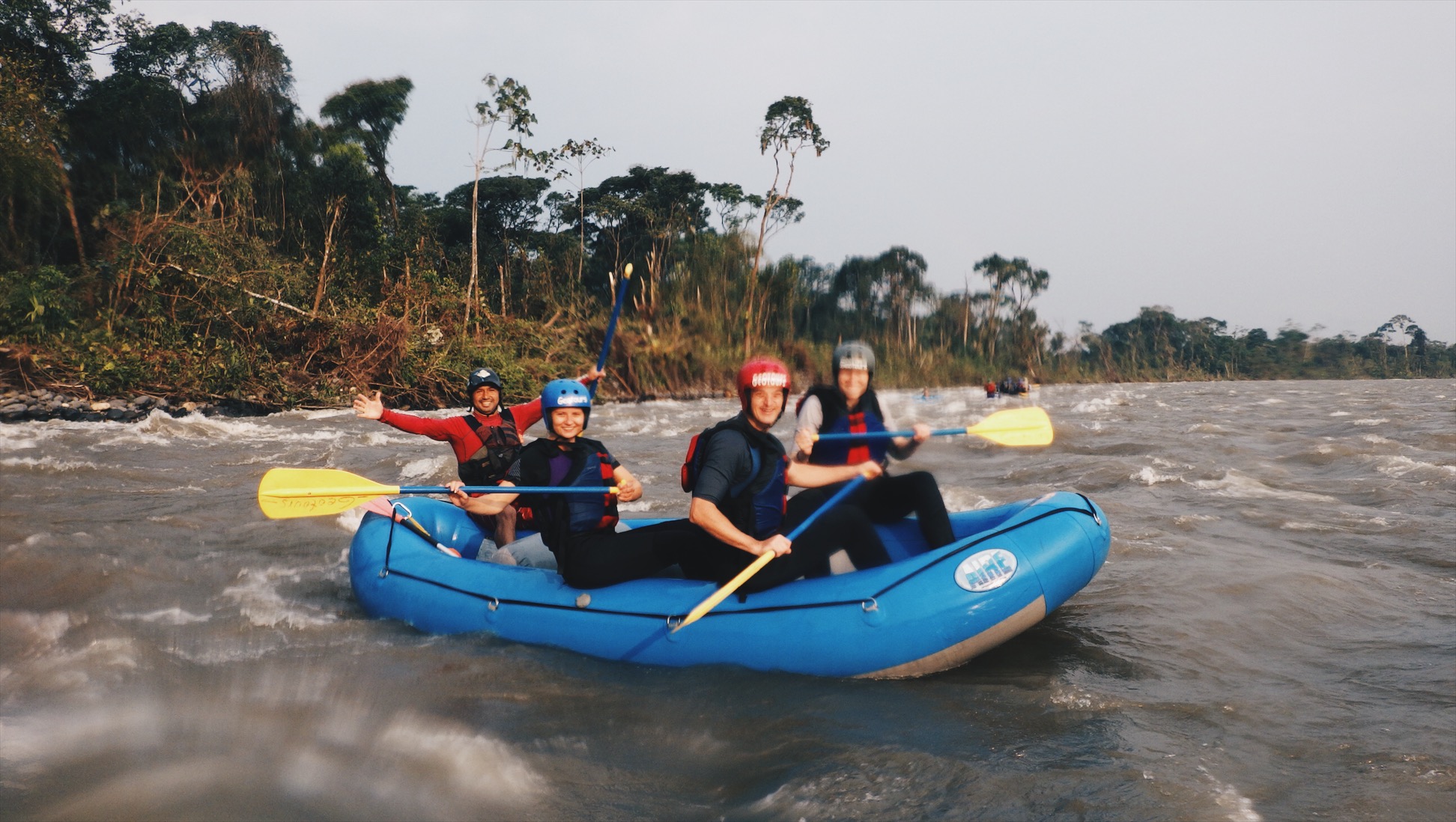
Baños is known for its wide range of activities upon offer, so on our last day we decided it was time to be adventurous. At 9am we went off to go canyoning; an activity I wanted to try in San Gil, Colombia where I ended up going paragliding instead. Now it was finally time to abseil down some waterfalls. After driving for about 45 minutes, we got changed into wetsuits, appropriate shoes, put on our harnesses and got a quick round of instructions. I briefly had time to ask myself what the hell I was getting myself into, before we started walking towards the first waterfall. Fortunately it ended up being lots of fun. We abseiled down three waterfalls, the tallest being 30 meters, went sliding down others and even ended up doing a bit of zip lining. When we reached the bottom of the trail I just wanted to keep going. "Off course you do, but that's why we're going rafting this afternoon", was the response I got, and so we did. While the group we went canyoning was huge, it ended up only being the three of us going rafting. According to our instructor that meant we were in for some extra exercise, but I was quite happy about having an upper body workout after all the hiking I'd done since arriving in Ecuador. As we got our basic instructions, however, I suddenly realised that I was terrified of ending up in the water. I spent about a quarter of the time in the boat being terrified, before finally learning to trust the boat and our guide. Eventually I ended up having a great time rafting as well. We returned to our hostel exhausted, but very excited about the day we had just had.

Baños ended up being a lot of fun, which was also why I went there. I could easily have filled up a few more days there, but it was also fine leaving after three days. I've found three days to be an ideal amount of time to spend in almost any city, as you get to experience the essentials without getting restless. On the way back to the hostel on the last night we stopped at the bus station to get our tickets for the following morning, but this time for different destinations. As I headed for Cuenca I was once again on my own, although it turned out it wouldn't be for long.

--

♥ Erica

Trekking the Quilotoa Loop

Hiking the Quilotoa Loop has definitely been one of the highlights of my trip so far. Beautiful hikes during the days and cozy evenings with great food and good company in the evenings; it doesn't get much better than that. Most people I have talked to in Ecuador seemed to be visiting the Quilotoa lake on a daytrip, but for anyone who has the time and a certain appreciation for hiking I would definitely recommend doing the whole loop. The loop can be done in different ways, so this is a guide to how I ended up doing it. I definitely recommend doing the loop in this direction as you are really saving the best for last. The only reason I can imagine for going the other way is to escape the awfully steep hills you will encounter when having the Quilotoa Lake as you're last stop, but they do make for a great workout and they'll make you feel even more proud of yourself once you've completed the loop. 

Day 1 - Quito to Latacunga

I enjoyed a chilled morning in Quito as I had no rush in getting to Latacunga. The town itself is quite uninteresting, but it is the most obvious starting point for anyone doing the loop. The bus from Quito leaves from Terminal Quitumbe, costs 2,35 USD and takes about two hours. Once in Latacunga I made my way through town to Hostal Tiana, which seems to this be the most popular choice for backpackers heading towards Quilotoa. The hostel was nice; it has a great view from the rooftop, comfortable dorms and a basic, but good breakfast. They also offer safe storage of your big bag, as it is best to only bring a daypack on the trail, for 1 USD per night. I was initially planning on doing the trek by myself, as I hadn't met anyone who was doing it at the same time as me. That changed within an hour at Hostal Tiana, and suddenly we were a group of five doing the trek together. I was happy to have company.

Day 2 - Latacunga to Sigchos to Isinlivi

Although we woke up quite early we weren't able to leave the hostel until about 10 am. As the Quilotoa loop is a circuit it can be done in both directions. We had decided to finish the trek at the lake rather than starting with it, as the lake is the most spectacular part of the trek. Therefore we started by taking the bus to Sigchos, and then hike from there to Isinlivi, a 14 km hike that's supposed to take 3 - 4 hours.

At 10.30 we got on the bus. The ride takes 2 hours, but offers pretty decent views, and costs 2,30 USD. The hike from Sigchos was scenic and went downhill for the first part, but ended with a pretty steep hill, taking us to about 3000 meter above sea level. We finished the hike in about 3 hours and then checked into Llullu Llama Hostel, which is probably the most recommended hostel in town. It certainly lived up to its reputation. This was the only hostel we had actually reserved in advance, as it does occasionally fill up. We were therefore able to settle into a cozy dorm and then jump in our swimming suits to relax in the jacuzzi. Usually the "spa" costs about 8 USD, but we were happy to learn that around this time of the year it is free to use. Afterwards we played board games and enjoyed the happy hour with two cocktails for 6 USD and a delicious three course dinner. I thoroughly enjoyed the vegetarian option. Llullu Llama had no wifi, which was actually really nice. Instead we socialised with other travellers until bed time.

Day 3 - Isinlivi to Chugchilan

We woke up just before 8 am to enjoy a deliciously filling family style breakfast at 8 am sharp. The hostel served lots of fruit, cereal and scrambled eggs with bread, which made us ready for the hike we had ahead of us. At 9.20 we left the hostel and started walking towards Chugchilan. The hike of the day was about 12 km and was supposed to take 4-6 hours. Just like the day before the hike started with a descent for the first few kilometres and ended with a steep hill on very uneven ground, which lasted for about 750 meters. The reward for making it to the top was a mirador with amazing views, where we had a quick lunch. At 13.10 we walked into the town of Chugchilan and got ourselves a dorm at the Cloud Forest Hostel for 15 USD per person including dinner and breakfast. The hostel certainly wasn't as nice as Llullu Llama, but still pretty alright. As we had the whole afternoon to spend there we checked out the game room, where there were ping pong and a pool table, before playing card games until dinner. Dinner was alright, although still a let down after last nights amazing meal. We ended the evening with even more card games, before calling it a night.

Day 4 - Chugchilan to Quilotoa

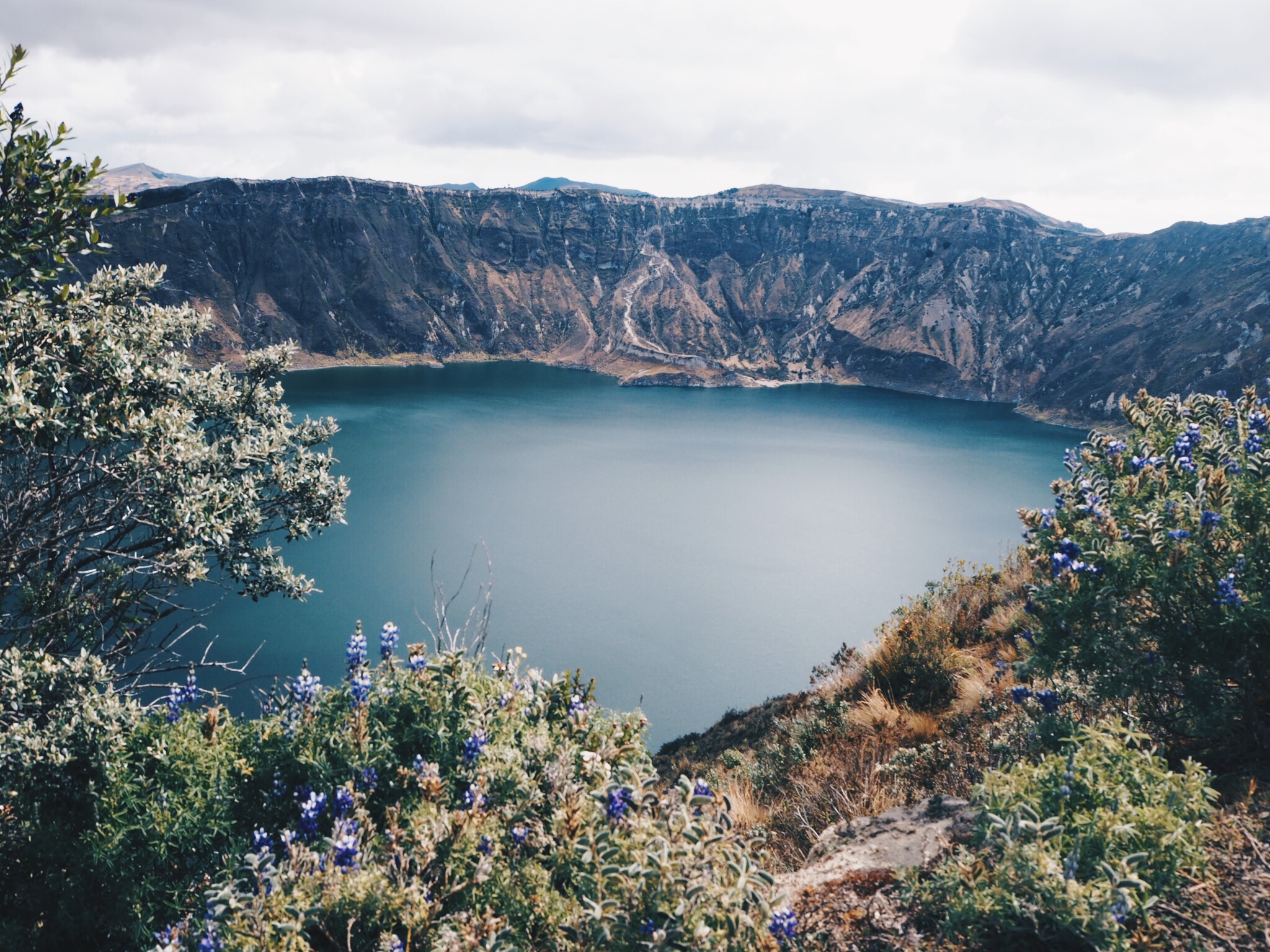
On day 4 our group had grown with two more people so there were seven of us setting out on the last day of the trek at 9.30 am. This part is supposed to be the toughest, but also the most beautiful, and we knew that by the end of the day we would end up at the Quilotoa Lake, which was sufficient as motivation. The trail started downhill for about 2 km, but after that it was all uphill, on some sandy and challenging paths. Luckily we were surrounded by beautiful nature and the occasional cute kid or animal, which made it all worth it. At 14.00 we finally reached the crater of the lake and it was beautifully placed in a valley with mountains all around it. Upon reaching the crater you can choose to do a long or a short hike around the lake and into the city of Quilotoa. The long way takes 3-4 hours, but allows you to reach the highest point in the crater at 3930 meters above sea level, while the short way takes about an hour. Our group decided to split up, and I joined three of the others in taking the long hike. When you've already been hiking for 4,5 hours you'd want to add another 4 hours to that amount, right? To be fair the last part was amazing and probably my favourite part of the entire trek, so it was definitely worth it, but I could also feel my body aching as we reached the hostel. In Quilotoa we stayed at Chukirawa Hostel, where we paid 16,88 USD each for a seven person dorm with dinner and breakfast included. The hostel was freezing, but otherwise alright. It was a good feeling going to bed that night, knowing that I'd accomplished a trek of about 46 km in about 15 hours over three days.

Day 5 - Quilotoa to Latacunga

It was quite a nice feeling waking up on the fifth day, knowing that I didn't have to rush off to anywhere. We enjoyed a long breakfast and then decided to take a closer look at the lake. The village of Quilotoa is located on top of the crater rim, so it took about 20 minutes of steep downhill walking to get down there. Down by the lake we rented kayaks for 3 USD per 30 minutes, which was an enjoyable experience. After relaxing on the dock for a while we started the much less enjoyable uphill hike. Steep, sandy hills are definitely not a favourite of mine. At 3 pm we caught the bus back to Latacunga for 2 USD. With that we were back to where we started and had officially completed the circuit. While most of us had vague plans of making it to our next destinations that afternoon, we all ended up staying in Latacunga for one more night. It was quite nice ending a chilled day with an equally chilled evening before setting off on new adventures.

Is it expensive to trek the Quilotoa Loop?

No. It really isn't. I've seen quite aggressively priced guided tours of the loop, but I honestly don't understand why a guided tour would be necessary. The hostels provide good directions, so finding the way around isn't difficult. We paid between 15 and 19 USD per night per person in a shared dorm, but this included both a three course dinner and a decent breakfast. Lunch boxes were available for purchase. I only got the one at Cloud Forest Hostel for 3 USD, and it was well worth the money.

In total I ended up spending 92,50 USD (726 NOK) over five days. This includes all meals, snacks, water refills, celebratory drinks, hostel beds, bus rides and so on that I've had, from the moment I got on the bus to Latacunga on day 1 until I returned five days later. With an average of 18,50 USD per day this will probably stand out as one of the cheapest highlights of my trip.

Other notes about the trek:

I think every blog I've read about the Quilotoa Loop points out how important it is to bring warm clothes, so I did that. My experience after hiking the loop in the middle of September is that it is in fact quite warm. I've been wearing t-shirt and tights for hiking, but could easily have worn shorts if I had brought some. A long sleeved shirt and sweat pants have been sufficient for the evenings, while gloves and head band have not once left my backpack. A wind proof jacket ended up being nice when we finally reached the lake, as it was quite windy around there. I did however expect the temperatures to be at the same level as Cotopaxi, but they really aren't. I guess you never really know what the temperatures will be like, but would still point out that it won't necessarily be cold.

Also, pack as lightly as you can. I brought my 18L daypack and was happy about the choice. Wearing the same trekking outfit five days in a row is just a part of the experience, right? Hiking boots that provides a good grip will definitely be an advantage, but I've also witnessed first hand that the trek can be completed in flip flops, although I don't think I would recommend it.

--

♥ Erica

Three days in Quito

I arrived at my hostel at my hostel in Quito after a long journey from Ipiales. Quito was a place I'd heard mixed things about, but I was excited to make up my own opinion. Regardless it was exciting to be in a new country, and even though I was tired from travelling all day I couldn't wait to start exploring.

My first night in Quito a few guys that worked at my hostel invited those who wanted to go up and see the Virgin of Quito at El Panecillo after dark. I jumped at the opportunity as I knew I would never go up there after dark on my own. We took a taxi up there and were rewarded with a great, panoramic view of the city. It was great going up there with locals, as they could tell us things about Quito that we wouldn't have heard if we were going there by ourselves. When visiting El Panecillo, no matter what time of the day, it is always recommended to take a taxi as the road up there is known for robberies, especially of gringos. After admiring the view for a while we were introduced to a local drink called Canelazo, made of aguardiente, sugar cane and agua de canela (water boiled with cinnamon). Not too bad, and the quite decent amount of aguardiente warmed us up in the otherwise chilly evening. We then visited a pub in El Foch, where we played football games, ate and drank, but while the others continued on to a club to go dancing, I decided to call it a night. It had been such a long day, and I was completely finished.

Free walking tour of Quito

Since I really enjoyed the free walking tours I'd been taking in Colombia, I decided to do one in Quito as well. It seemed like a good idea to get a certain overview of the city, and it really was. I made my way over to Community Hostel, and during the about three hour long tour through Quito's old town I learned a lot not only about Quito, but about Ecuador as well. I constantly find myself realising how little I know about South America, and then I feel really grateful for having this opportunity to learn. I'll definitely be doing more walking tours in the future.

Mitad del Mundo

When the tour ended, the same hostel offered transport to Mitad del Mundo, the middle of the world, and I decided that it would be a great opportunity to get this checked off my list. I payed 10 USD and that only included the transport, so this can obviously be done a lot cheaper if you go on your own. I still found the door-to-door transport convenient and it was also nice going there with a little group. The place itself is quite random. We paid about 4 USD for a guided tour of the actual middle of the world, and the first thing our guide said to us was "I'm now gonna tell you how the indigenous people used to shrink sculls". No introduction needed there. We couldn't help but laugh as we were expecting the tour to be about the equator line, but he also got to that eventually. We then got to try to balance eggs on a nail and walk on the equator line with our eyes shut, both difficult tasks, and obviously take a few photos with the "latitude 000" monument. It just had to be done. When finished at the actual middle of the world we moved on to what used to be known as equator before they had technology good enough to identify the right place. It costs about 3 USD to enter here, only to see a much bigger monument which isn't even on the equator. As we had already visited the actual one none of us bothered to pay, but we snapped a few photos from outside the fence before returning to the car to make the one hour drive back to Quito.

Climbing the Cotopaxi volcano

The morning after I woke up around 6:30, super excited to do one of the things I was the most excited about doing in Ecuador; I was climbing the Cotopaxi volcano. Although slightly curious about how I would deal with the altitude of almost 5000 meters above sea level, I decided that the past week should have gotten me sufficiently acclimatised and figured that I'd be fine. I went with a company called Ecuatravel and booked the tour through my hostel for 55 USD. This included the bus ride back and forth, a bilingual guide, breakfast and lunch, plus mountain bikes and helmets to make the ride down the volcano a bit more interesting. Once I got on the bus I discovered that most of our group were in their 60s, and quickly decided that I needed to make it to the top no matter what. In my group were also a couple of guys with whom I'd done the walking tour the day before, and it's always nice with familiar faces when travelling by yourself. On our way to Cotopaxi we made multiple stops, to have breakfast, gradually get used to the altitude, stock up on snacks and coca leaves, also because of the altitude, and so we could use the toilet. Eventually we made it to 4600 meters above sea level, which is where we got out and started the climb from. We were advised to walk slowly, take deep breaths and listen to our bodies. I had expected to feel a slight headache, which I luckily didn't, but it was weird feeling how quickly the altitude made you run out of breath while climbing. Once I found a steady pace and a good rhythm for my breath, the altitude stopped bothering me. I brought out my inner mountain goat and pulled my group of about six people towards the top, being the first of us to make it to the highest point you are currently allowed to climb. I'll admit that I felt a little bit proud about that. As the volcano is active and had its last eruption only two years ago, a refugee at 4864 meters above sea level marks the end point for adventurous climbers like us. Unfortunately we were up there on a foggy day, so the sights weren't great, but we still got some celebratory pictures taken. We then chilled at the cafe in the refugee for a while, and for the second time in the same amount of days I cursed myself for not bringing my passport along. Both on Cotopaxi and Mitad del Mundo it is possible to get your passport stamped and I missed out on both. Not the end of the world, but they still would have been cool additions to my passport stamp collection. When feeling sufficiently restored, we ran back down to the bus to start the mountain biking. We were each given a bike and a helmet, and some quick instructions before we set off down the volcano. Having no experience with mountain biking and not having biked in god knows how long, it is safe to say that I found the first kilometres challenging, but eventually I learned to trust the bike, and while my hands were pounding from clutching the breaks, I actually started enjoying myself. We finished the ride by a beautiful lake and were happy to find that we all made it down safely. We got back to the bus, made a stop for lunch and then got on the road back to Quito. I returned to my hostel tired, but content. This was easily one of the best days of my trip so far.

A ride on the teleferico

Quito might have been the first city on my trip where I actually had a list of things I wanted to do. With only one activity left on this list, I decided that my third day in Quito would also be my last. I was eager to start my hike of the Quilotoa Loop and therefore wanted to make it to Latacunga that day, but I couldn't leave before taking a ride on the teleferico. I got a taxi to the teleferico for 3.50 USD, and was surprised to find the place completely empty. I bought a return ticket for 8,50 USD and happily entered the wagon I got all to myself. The ride up was great, with excellent views of the city. I spent a good hour admiring Quito from all angles before heading back down. It is also possible to do a five hour hike from the top of the teleferico, and if I hadn't been leaving Quito that day I probably would have gone for the hike. Instead I got back to my hostel, had some cereal for lunch and got on the trolebus headed for the bus terminal. The C4 bus takes you to the Terminal Quitumbe (in the south) for 0,25 USD, which makes it a cheap alternative to a 10 USD cab ride, and it doesn't even take that much longer. Once at the bus terminal I bought a ticket for the 1 hour bus ride to Latacunga, and left Quito about five minutes later.

I feel like I could easily have spent more time in Quito, as I've seen far from everything. I only spent time in the old city, although I can't really say that regret that. After only a short time I found it easy to find my way around and I quite enjoyed just walking the streets of Quito. More than anything it was the activities that really made my time in Quito. Before I got there I'd read that a lot of people only use Quito as a hub for onward travel, but I definitely think it is worth spending a few nights there as well. For me my stay made for a great welcome to Ecuador and made made me excited for my upcoming weeks in the country.

--

♥ Erica